
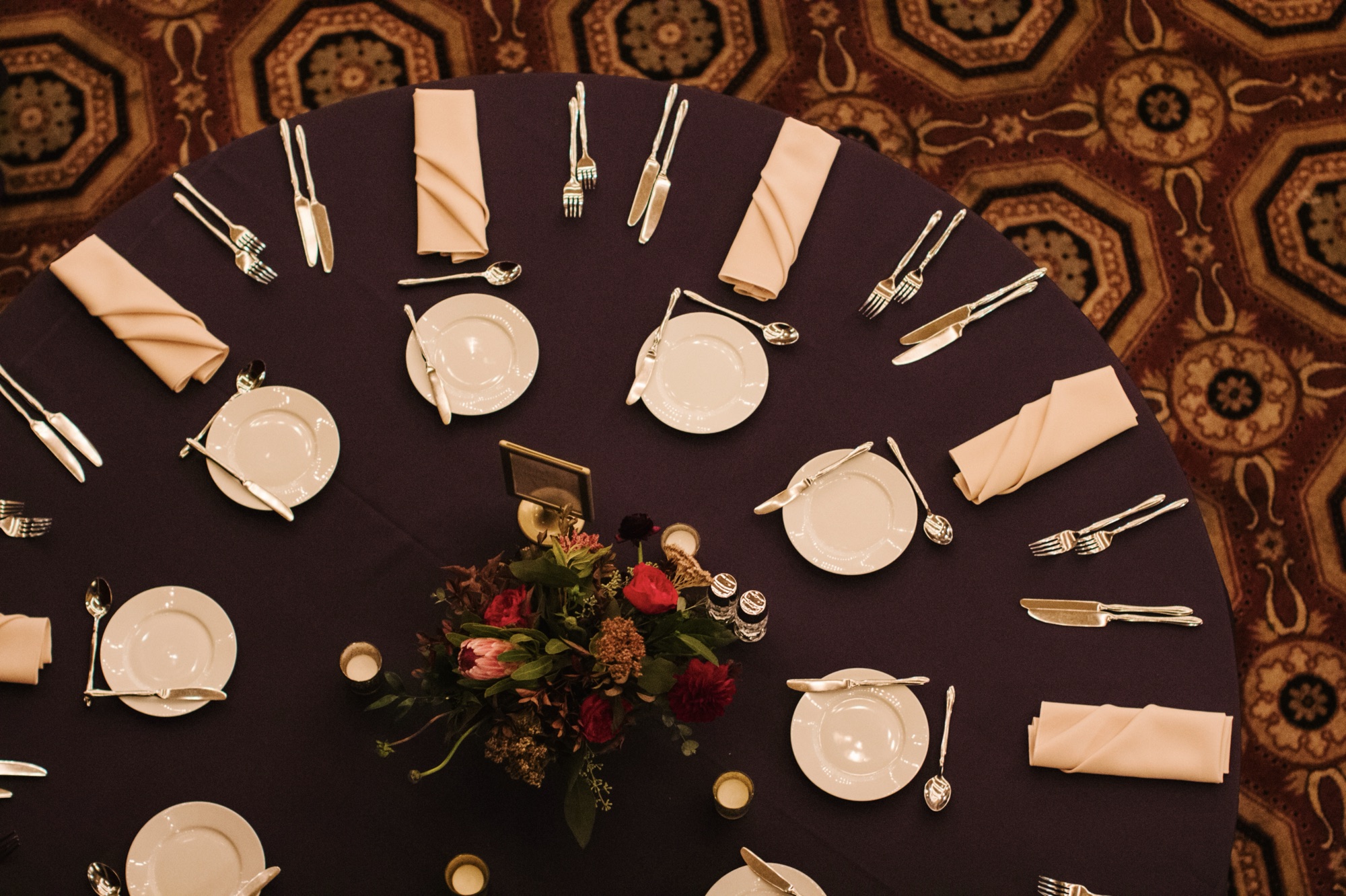
How Wedding Catering Works When You Book a Venue in Grand Junction
Not every venue handles food the same way. The catering setup shapes every food decision that follows. Getting clear on how it works early saves a lot of confusion later.
In-house catering means the venue's own kitchen and staff cook and serve the meal. The menu comes from the venue. Most kitchens will work with couples on changes within their style. One team handles the food, the setup, the serving, and the cleanup. One contract. One phone call when something needs to change. Wedding services at Redlands Mesa are built around this model — so couples who do not want to juggle a separate food vendor have the easiest road possible.
Outside catering with a venue kitchen means the couple hires their own caterer. That caterer brings their recipes and staff but uses the venue's kitchen and serving space. This opens up the menu, but it adds moving parts. The caterer needs access to the building, time to set up, and their own insurance. Some venues charge a kitchen fee on top of the rental.
Drop-off or food truck service is a third option at venues that allow it. The food shows up ready to serve. The couple or a day-of coordinator handles the plating and timing from there. This works for casual receptions and smaller groups, but it puts more on someone's plate — literally — during the wedding itself.
Clubhouse venues up in the Redlands and along the Riverside Parkway typically run in-house catering with set menus and per-person pricing. The kitchen knows the room. The staff knows the flow. For couples who want food taken care of without a lot of back-and-forth, this setup takes a whole layer of planning off the table.
The first question to ask on any venue tour in the Grand Valley: how does food work here? That answer tells a couple more about their planning timeline than almost anything else.
Plated, Buffet, and Station Service — Which Format Feeds the Crowd Best
How the food reaches the table changes the whole feel of the evening. Each format affects the pace, the mood, and the price.
Plated service means waitstaff brings each course right to the guest. Portions stay controlled. Timing stays steady. It feels polished and keeps dinner moving on schedule. When catering for weddings, the trade-off is staffing — plated dinners need more servers, which bumps the labor cost up. It also keeps guests in their chairs longer. That works well in a ballroom, but it can feel stiff at a laid-back outdoor reception.
Buffet service means guests walk up to a serving line and pick what they want. People eat at their own pace, try more dishes, and move around the room. Fewer servers are needed, which brings the labor cost down. But food volume goes up. Trays need to stay full through the last person in line, which means ordering more food than a plated count would need. Buffets also get people out of their chairs, which helps guests from different tables mix and talk. There is a social side to a buffet that plated service does not have.
Station service places different food categories at separate tables around the room — a carving station, a pasta station, a taco bar, a charcuterie spread. Guests graze and visit stations in any order. It feels like a food festival and works great for couples who want variety. The downside is that it spreads people across the room, which can thin out the dance floor.
Outdoor receptions near Orchard Mesa and out in Fruita lean toward buffet or station setups. The casual open-air setting matches a relaxed serving style. That is just how things tend to go on the Western Slope. Indoor ballrooms in the Redlands suit plated dinners where wait staff can move between close tables without crossing long distances.
One thing worth thinking about that gets overlooked: the service format affects photos too. Plated meals keep the room still and composed during dinner. Buffets and stations create more movement and candid moments. Neither is better. Both give the photographer different material to work with.
How To Estimate Food Quantities for 50, 100, or 200 Guests
Ordering the right amount of food is one of the trickiest parts of wedding catering. Too much means waste and wasted money. Too little means empty trays and hungry guests — and nobody forgets that.
Here is a simple framework that works for most Grand Junction receptions.
Cocktail hour appetizers. Plan six to eight pieces per person for a 45- to 60-minute cocktail hour. These are finger foods — charcuterie bites, skewers, bruschetta, sliders. The goal is to take the edge off hunger without filling people up before dinner arrives.
Entree portions. One full serving per guest. If there are two entree choices, ask for a split — usually 60/40 between the more popular option and the backup. Always have a vegetarian plate ready, even if only a few guests ask for it.
Dessert. One serving per person. If the dessert table has several small options — brownie bites, lemon tartlets, cake slices — plan for each guest to grab two or three small items instead of one big piece.
Buffet adjustment. Buffets need about 20 percent more total food than plated service. Every tray needs to look full for every guest, including the last one through the line. Running low on the main course with 30 people still waiting is the kind of moment that defines how people remember the food.
Grand Junction's summer wedding season brings one thing couples in cooler places do not have to think about: the heat. July and August receptions near the Colorado River and at open-air venues across the Grand Valley run in 90- to 100-degree weather. Guests eat less when it is hot out. Lighter appetizer counts and slightly smaller portions work better in peak summer than the standard numbers suggest. A caterer who works Grand Junction summers already knows this and plans for it.
Menu Ideas That Please Large Groups Without Overloading the Kitchen
Feeding 80 to 200 people is not the same as cooking dinner at home. The kitchen has to put out the same dish at the same quality on every single plate, all at the same time. That means picking items that hold up at scale and skipping anything that falls apart after sitting on a warming tray for ten minutes.
Entrees that hold up well:
- Herb-roasted chicken — crowd-friendly, pairs with anything, holds temperature
- Braised beef or prime rib — the premium pick that stays tender on a buffet line
- Grilled salmon — a lighter protein that gives the menu range
- Pasta with a rich sauce — marinara, alfredo, or pesto all scale without losing quality
- Portobello steaks or eggplant parm — a real vegetarian main, not a side dish pretending to be one
Appetizers that keep cocktail hour moving:
- Artisan charcuterie boards with cured meats, cheeses, fruit, and crackers
- Bruschetta crostinis or fig jam and goat cheese toasts
- Sliders — pulled pork, meatball, or wagyu with brie
- Skewers — honey garlic chicken, cilantro lime shrimp, or caprese
- Chips with house-made salsa and guac
Here is something experienced caterers will say: the entree guests talk about most is usually not the most expensive one. It is the one with the best seasoning and sauce. A perfectly roasted chicken with a pan jus gets more compliments than a dry filet mignon every single time. How the food is cooked matters more than what it costs.
Western Slope ranches supply beef and lamb that caterers right here in the valley source locally. Palisade orchards provide seasonal fruit for appetizer boards and dessert spreads during summer and early fall. A menu built around what grows and grazes in the Grand Valley tastes different from food shipped in from somewhere else. Guests notice, especially the ones who came from out of state. The food should taste like it belongs where the wedding is happening.
In-House Catering vs. Outside Caterer — What Each Option Means for the Day
This choice affects how much planning goes into the food side of the wedding. Neither option is always better. The right call depends on the venue, the menu vision, and how many moving parts the couple is willing to manage.
In-house catering keeps things simple. The kitchen is already on-site. The staff already knows the room — the layout, the outlets, the path from the kitchen to the table. No delivery truck. No rented warmers. No separate contract. Service staff are usually folded into the catering fee, so one bill covers food and labor. There is also less that can go sideways on the wedding day when the people cooking the food work in that building every week. The trade-off is menu range. In-house kitchens work from a set list, and while most will make changes, the options are narrower than what an outside caterer brings.
Outside catering opens the menu wide. A couple who wants a very specific cuisine — or a cultural menu the venue kitchen does not serve — can hire a caterer who does exactly that. But the logistics stack up. The caterer needs kitchen access, delivery time, serving gear, and their own insurance. Some venues charge a kitchen fee. Others want a health department inspection before the event. A separate contract means separate payments and separate phone calls.
Several Grand Junction venues along North Avenue and up in the Redlands require in-house catering or give couples a short preferred-vendor list. This is not a secret policy, but it does surprise couples who assumed they could bring anyone in. Asking about the catering model during the very first tour — before signing anything — avoids falling in love with a space and then finding out the wedding food setup does not match the plan.
For couples who like the venue's in-house menu but want a few tweaks, asking about swaps or custom builds is a smarter first step than jumping to an outside caterer. A lot of in-house kitchens are more flexible than their printed menu shows. The chef may be willing to change a side, adjust a sauce, or add something that is not on the standard list. That conversation is worth having before assuming the answer is no.
Ways To Keep Catering Costs Down Without Cutting Quality
Catering is usually the biggest or second-biggest line item in a wedding budget. There are several ways to bring the number down without serving food that feels cheap.
Go buffet instead of plated. The per-person labor cost drops because fewer servers are needed. Food volume goes up, but the staffing savings usually outweigh the extra food — especially for groups over 80.
Stick to two entree options. Every added entree increases kitchen work and ingredient cost. Two proteins — one premium, one mid-range — plus a vegetarian plate cover almost every guest without tripling the prep.
Serve beer and wine instead of a full open bar. A good selection of two or three wines and a few craft or local beers keeps most guests happy. Add one signature cocktail for personality. The full open bar sounds great on paper, but the per-drink cost adds up faster than most couples expect.
Use seasonal Palisade produce. Grand Junction's farmers markets and the Palisade fruit stands along the highway peak during summer and early fall — right when most weddings happen out here. Caterers who source locally during harvest pass that seasonal pricing along. Peaches, cherries, tomatoes, peppers, and squash cost less and taste better when they come from 15 minutes down I-70 instead of a warehouse in another state.
Skip the late-night snack station if the timeline does not support it. A midnight snack bar is a fun add-on when the dance floor is packed at 11 PM. If the reception wraps by 10 and most guests leave after cake, the snack station sits mostly untouched. Match the food plan to the actual schedule, not to a list off a wedding blog.
Ask the caterer what they would cut. A good caterer has seen dozens of weddings at the same guest count and knows where the waste happens. Asking straight up — "If this budget needed to drop 10 percent, where would the food quality change the least?" — often gets a better answer than guessing alone. Caterers who work the Grand Valley know which line items bend and which ones do not. That experience is there to use.
Host Your Wedding at Redlands
Redlands Mesa provides space for both wedding ceremonies and recptions.