
How Many Guests Should I Plan for at a Rehearsal Dinner in Grand Junction?
That range surprises a lot of people. They picture something small — just parents and the wedding party around a table. Or they imagine something nearly as big as the wedding itself. Most couples land somewhere in the middle.
Your number depends on your wedding size, your family situation, and how you want the night before to actually feel. Here's what we see most often when couples start building a rehearsal dinner guest list:
- The wedding party plus their partners. This alone can be 10 to 20 people depending on how many attendants you've chosen.
- Immediate family on both sides. Parents, siblings, grandparents. Sometimes aunts and uncles who drove in from Montrose or flew in from further out.
- Out-of-town guests. This is the one that pushes numbers up fast. If half your guest list traveled to Grand Junction, leaving them on their own the night before feels wrong.
- The officiant and their spouse. A small gesture that's easy to forget during planning.
- Close friends not in the wedding party. People who've been part of your story but didn't get a formal role.
A couple with a 150-person wedding might land around 35 for the rehearsal dinner. A couple with 80 wedding guests might keep it closer to 20. There's no formula, just a feel for who truly needs to be there.
When the Number Creeps Higher
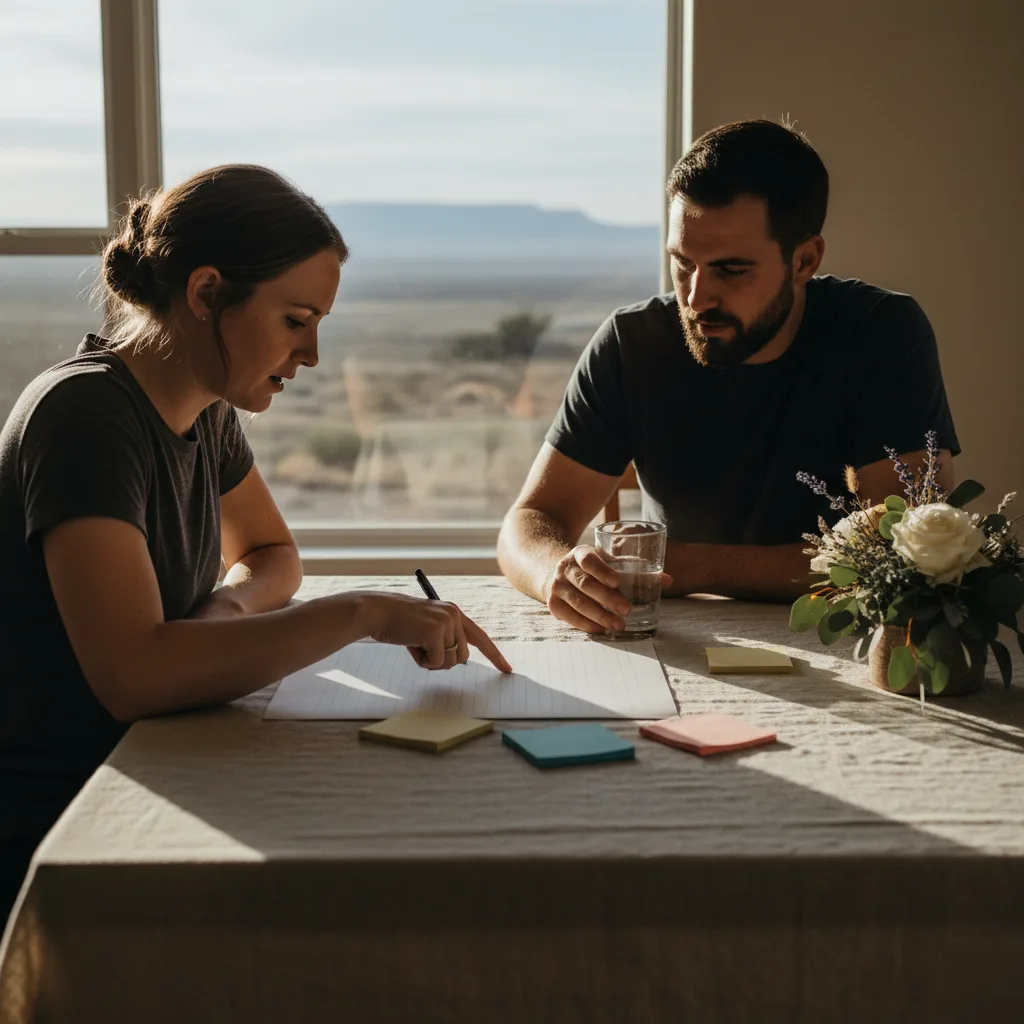
You start with 25 names and end up at 55. It's not a problem if you plan for it. It is a problem if you already booked a rehearsal dinner venue in Grand Junction with a 30-person cap.
Grand Junction draws a real mix of destination wedding guests. People come from Denver, Salt Lake City, and further out. When someone takes time off work and buys a plane ticket for your wedding, skipping them at the rehearsal dinner feels awkward. So the list grows.
One couple we worked with near the Redlands planned for 28 guests. By the time they added out-of-town family and a few childhood friends, they were at 47. That's not unusual. It worked out because they chose a venue with room to flex.
When Smaller Makes More Sense
Not every rehearsal dinner needs to be a production. Some couples want a quiet night — just the people standing beside them at the altar, plus parents. Maybe 12 to 18 guests total.
Smaller dinners feel more personal. You can actually talk to everyone. The toasts land differently. The nerves settle. If your wedding day is going to be loud and full, a calm night before is worth protecting.
Your guest count shapes everything else. The venue size, the food setup, the seating, the whole feel of the evening. A dinner for 20 feels nothing like a dinner for 50. Neither is wrong. They just need different planning.
Start with your must-invite list. Write down every name that would feel wrong to leave off. That's your floor. Then decide how far beyond that you want to go.
Who Belongs on a Rehearsal Dinner Guest List
Everyone who participates in the ceremony gets a seat at the rehearsal dinner. That's the core rule. From there, you build outward based on your budget and your venue's capacity.
Here in Grand Junction, most rehearsal dinners we help plan fall between 20 and 50 guests. Yours could look different.
The Must-Have Group
Start here before you add anyone else:
- The two of you
- Both sets of parents and stepparents
- All bridesmaids, groomsmen, and their partners
- The officiant and their spouse or partner
- Flower girls and ring bearers with their parents
- Any readers or ceremony musicians
This core group usually lands between 15 and 30 people. For many couples in Grand Junction, stopping right here feels right. A smaller dinner lets you actually talk to everyone at the table.
The "Nice to Include" Group
Once your core list is set, you might want to expand. Grandparents are almost always added next. Then siblings not already in the wedding party. Then close aunts, uncles, and cousins who traveled from out of town.
If someone flew in from across the country to celebrate with you, leaving them without dinner plans the night before feels awkward. Most couples solve this by including all out-of-town guests. It's a generous move that people remember. But the numbers can jump fast.
One couple we worked with started at 25 for their rehearsal dinner. After adding out-of-town family and a few close friends, they hit 65. Not a problem if you plan for it. A real problem if you don't.
Who You Can Skip
Not every wedding guest needs a rehearsal dinner invite. Coworkers, casual friends, and local extended family are fine waiting until the big day.
- Local guests who'll see you at the wedding tomorrow
- Plus-ones of plus-ones
- Vendors and coordinators unless they're personal friends
Here's a situation we run into often near the Redlands and Orchard Mesa. A couple books a rehearsal dinner venue thinking they'll have 20 guests. Then both moms start asking about cousins. Suddenly you're at 40.
Build your list in those three tiers first, then pick your venue. Not the other way around.
The Partner Multiplier Effect Grows Your Headcount Fast
Here's what catches most couples off guard. You start with a short list of people who need to be there. Then you realize each person has a partner. Your cozy dinner for 20 becomes a sit-down for 40.
A couple walks in thinking they'll host maybe 15 people. They pull out their list and start counting. Six bridesmaids, six groomsmen — that's 12. But ten of them are in relationships. Now you're at 22. Add both sets of parents, a few grandparents, the officiant and their spouse. You're pushing 35 before you've thought about out-of-town guests or close family friends.
How the Numbers Actually Stack Up
Take every person on your must-invite list. Then ask one question: do they have a partner? If yes, that's two seats, not one. It sounds obvious. People still forget to do this until they're finalizing the headcount two weeks out.
Here's a quick way to estimate your real number:
- Write down every member of the wedding party
- Add both sets of parents and stepparents if that applies
- Include grandparents, siblings, and their partners
- Count your officiant and any readers or musicians
- Mark which of those people will bring a plus-one
- Add that plus-one number to your base count
Most couples find the partner multiplier adds 40 to 60 percent more guests. That lines up with what we see here in Grand Junction, especially when both families are local and the wedding party is mid-sized.
When It Really Gets Tricky
Large blended families are the biggest factor. If you've got stepparents on both sides, each with their own extended family, the "close family only" list grows fast. Nobody wants to leave out a step-sibling's long-term partner.

Destination-style gatherings in the Grand Valley push numbers up too. When guests travel from out of state, including them is the right call. Their partners come too.
A couple we worked with last fall started with 18 names. Twelve guests were flying in from the East Coast. Every one brought a spouse or partner. Final count landed at 42.
Build your list in two rounds. Round one is the non-negotiable names. Round two adds partners. This way you see the real number before you commit to a rehearsal dinner venue in Grand Junction. It also helps you spot where you might need to draw a line.
Cutting partners from the list creates more drama than just finding a bigger table. If you invite a bridesmaid but not her fiancé, that conversation gets awkward fast. It's almost always easier to plan for the larger number from the start.
The partner multiplier isn't something to fight. It's something to plan around.
Host Your Wedding at Redlands
Redlands Mesa provides space for both wedding ceremonies and recptions.