
Greenest Months for a Grand Junction Golf Course Wedding
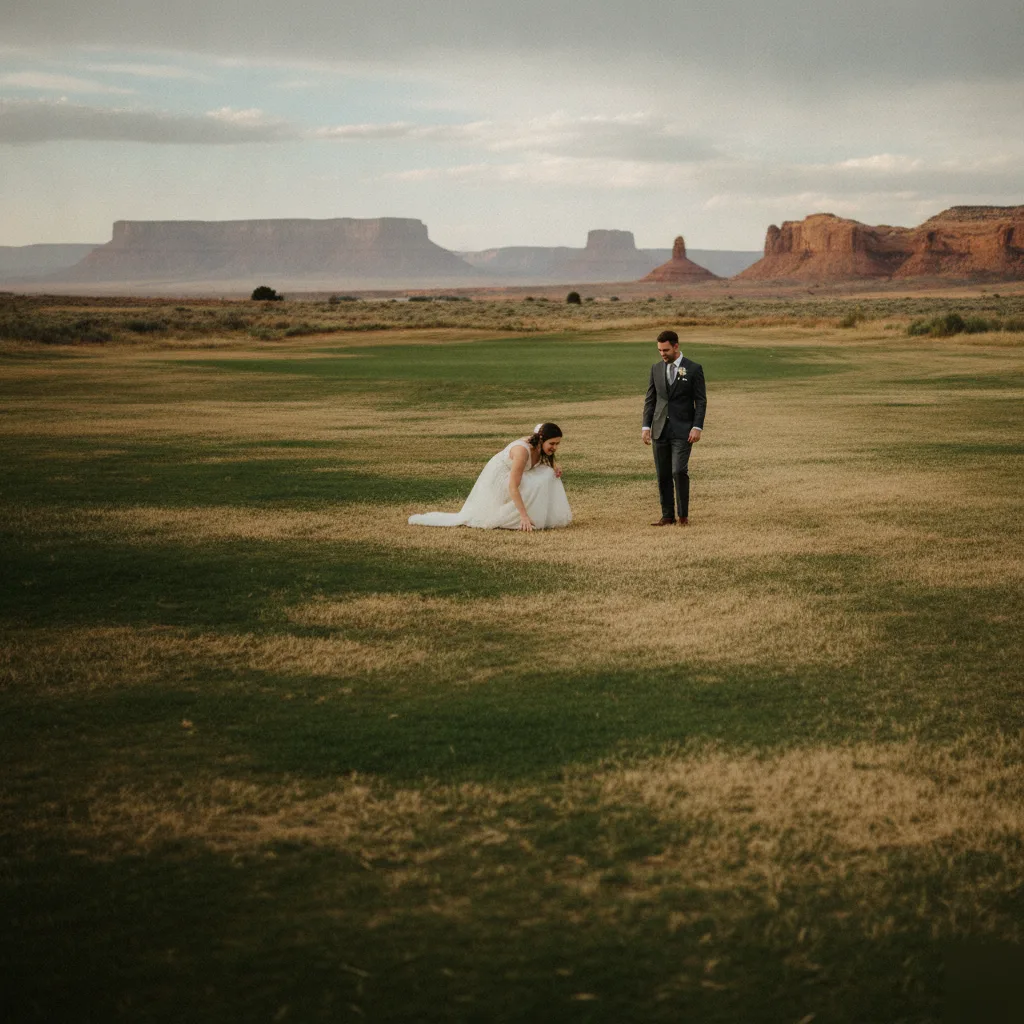
Grand Junction sits in a high desert valley. That single fact shapes your entire golf course wedding timeline. We get around 8 inches of rain per year, the Western Regional Climate Center tracks our precipitation, and the numbers are pretty stark. Compare that to Denver's 15 inches or the national average of 38. Our turf doesn't stay green on its own.
So how do golf courses here keep their fairways lush? Irrigation. Every drop is planned.
Course superintendents in the Grand Valley pull water from snowmelt off the Colorado River and its tributaries. That water flows heaviest from late April through June. During those months, reservoirs fill and irrigation systems run at full capacity. The grass responds fast. By mid-May, fairways shift from dormant brown to deep green, and the turf gets thick and soft underfoot.
What Makes Our Growing Season Different
Most golf courses in Grand Junction use cool-season grasses like Kentucky bluegrass and perennial ryegrass. These grasses do well when daytime temps sit between 60 and 75 degrees. That window hits reliably from mid-May through mid-June and again in September through early October.
But here's what catches people off guard. July and August bring temperatures above 95 degrees, regularly. Grass goes into heat stress. Even with steady irrigation, fairways can thin out and lose that deep color. We see this every summer. Couples who book a late July ceremony sometimes expect the same green backdrop they saw during a spring visit.
The reality looks different under a 100-degree sun.
Here's what drives fairway color through each part of the season:
- Late April through mid-June: Peak irrigation plus mild temps create the greenest, most photogenic turf of the year
- Late June through August: Heat stress causes browning at the edges, and courses may pull back on water during drought years
- September through mid-October: Cooler nights trigger a second green-up, and fall color in the Bookcliffs adds a real bonus backdrop
- November through March: Dormancy turns fairways tan or brown, irrigation shuts down
That fall window surprises a lot of couples. The grass bounces back once overnight lows drop below 60, and the recovery can happen in just two to three weeks.
How Local Water Supply Affects Your Date
Grand Junction's water situation matters more than most couples realize. In low-snowpack years, irrigation districts may cut allocations. Courses adjust by watering less often or focusing resources on greens and tee boxes rather than fairways. A drought year can mean noticeably thinner turf by midsummer.
And this isn't hypothetical. We've watched it happen.
One couple planned a late June golf course wedding during a below-average snowpack year. The fairways near the ceremony site looked patchy in spots. Their photographer worked around it beautifully, but they told us they wished they'd asked about water conditions earlier in the planning process. That conversation would've taken five minutes.
That's why we always suggest checking in with your venue about current turf conditions a few weeks before your date. A quick call removes the guesswork.
If green fairways rank high on your list, aim for that May-to-mid-June window or the September recovery period. Those months give you the best odds for the backdrop you're picturing. Grand Junction's desert climate isn't working against you. You just need to work with its rhythm.
Curious how our outdoor wedding venue looks during peak green season? Reach out and we'll walk you through what to expect for your specific date.
May and June Deliver the Most Reliable Green Conditions
If you want the greenest fairways for your golf course wedding in Grand Junction, book in May or June. That's the sweet spot. The grass is thick, the color is deep, and the whole course looks like a postcard.
Here's why these two months win out.
Grand Junction sits in a high desert climate. We get about 9 inches of rain per year. Our golf courses rely heavily on irrigation to stay green, and by May, course managers have had weeks of steady watering and spring feeding schedules in place. The turf has fully come out of dormancy. It's dense and photo-ready, the kind of green that makes your backdrop do half the work for you.
What Makes May Special
May is when everything clicks. The cool-season grasses have been growing since early April. Warm-season turf is waking up too. You get this overlap where every part of the course looks alive. Daytime highs sit around 78 to 82 degrees, so the grass isn't stressed by heat yet. And the soil still holds moisture from spring irrigation cycles.
We've had couples specifically choose mid-May dates because the Bookcliffs in the background still carry a little snow on top. Green fairways below, white peaks above. That contrast is something you can't recreate later in summer.
Why June Holds Strong

June stays reliable because irrigation keeps pace with the warmer temps. Course superintendents in Grand Junction know how to manage turf through our dry heat, and the fairways hold their color as long as water schedules stay consistent. Most courses are in peak condition right now for their busiest golf season.
Temperatures climb into the mid-80s to low 90s. But mornings and evenings? Still comfortable. A 6 p.m. ceremony in June means golden light, cool breezes off the Colorado River corridor, and grass that practically glows.
One thing most couples don't know: by late June, some turf varieties start showing minor heat stress. It's subtle. You might see slightly lighter patches in high-traffic areas. So if June is your pick, aim for the first three weeks.
Here's what to look for when you tour a golf course wedding venue in May or June:
- Fairway color should be a consistent deep green with no brown spots or dormant patches
- The rough and fringe areas around ceremony sites should be freshly mowed and thick
- Flower beds and landscaping near event spaces should be fully planted and blooming
- Irrigation heads should be positioned away from your ceremony footprint
We always tell couples to visit the course during the same month they plan to marry. Photos from September won't tell you what May looks like. Walk the grounds. Stand where your guests will stand. See it yourself.
But here's the honest truth. May and June book fast. Really fast. Couples planning a golf course wedding in Grand Junction often lock in their date 10 to 14 months out for these prime months. If you're reading this and thinking "that's our window," don't wait to reach out.
The mix of mild weather, peak turf health, and long evening light makes these two months hard to beat. Your photos will show it. Your guests will feel it. And you won't spend a single second wondering whether the grass looks good enough. It will.
Summer Heat in July and August Affects More Than Just Comfort
Grand Junction regularly hits 95°F or higher from mid-June through August. Local climate records put average July highs around 97°F. That kind of heat changes everything about a golf course wedding.
Start with the grass itself.
Most golf courses in Grand Junction use cool-season turf blends. These grasses do well when daytime temps stay between 60°F and 75°F. Once you push past 90°F for days in a row, the turf goes into survival mode. It stops growing as fast. Color fades from deep green to a dull, washed-out tone. Brown patches show up along south-facing slopes and high-traffic areas near greens and tee boxes.
We see this every summer. Couples who tour a golf course wedding venue in May fall in love with the lush look, then worry when July photos from the same spot tell a different story. The grass isn't dead. It's stressed.
What Heat Does to Your Ceremony Setup
Fairway conditions in July and August affect your day in ways most people don't think about until it's too late:
- Chair legs sink into dry, cracked soil more easily, creating uneven seating rows
- Turf near irrigation lines stays greener, but areas farther from sprinklers can look patchy in photos
- Afternoon sun on an open fairway creates harsh shadows that are tough for photographers
- Guests in formal attire get uncomfortable fast, and that shows in candid shots
And it's not just the visual side. Heat puts real limits on your timeline. An outdoor ceremony at 2 p.m. in late July? That's a tough ask for your guests, your wedding party, and your flowers. Most couples who book a summer golf course wedding in Grand Junction shift their ceremony to early evening. Smart move.
Irrigation Can Only Do So Much

Golf course maintenance crews work hard through the summer. They water early in the morning, adjust mowing heights, and apply treatments to keep things looking presentable. But there's a limit. The Grand Valley's semi-arid climate means low humidity and intense sun. Water evaporates fast, soil dries out between cycles.
Even a well-maintained course won't match its spring or early fall appearance during peak summer. That's just the reality.
Here's a scenario we've walked through with couples more than once. A bride books a July date because it works for out-of-town family. She loves the idea of an outdoor wedding venue with mountain views and green fairways. By mid-July, she's nervous because the grass near her ceremony spot looks tired. The course crew does extra watering, the area improves a bit, but it never matches the May tour. She still has a beautiful day. But she tells us later she wished she'd picked September.
That story repeats itself.
If a summer date is your only option, there are ways to work with it. Choose a ceremony location near irrigated greens rather than open fairways. Plan for late afternoon light. Use your venue's indoor space for cocktail hour so guests can cool down. Our golf course wedding venue keeps ceremony and reception in one location, so moving between indoor and outdoor spaces is simple.
But if you have flexibility on your date, keep reading. The months just before and just after summer offer a real difference in turf color and guest comfort.
Host Your Wedding at Redlands
Redlands Mesa provides space for both wedding ceremonies and recptions.
