
What Is the 50/20/30 Rule for Wedding Budgets? A Grand Junction Guide
The 50/20/30 rule splits your wedding budget into needs, wants, and extras. Half goes to must-haves like your venue and food, twenty percent covers nice-to-haves like flowers or a photo booth, and the last thirty percent handles everything else, from attire to favors. Most couples never sort their list this way, and it costs them later.
Locking your wedding venue first keeps the split realistic. Here's a mistake we see all the time in Grand Junction: couples fall for their favorite florist before they've even locked down a venue. Then the math falls apart fast. So before you spend a dollar, sort every wedding cost into two piles. Needs. Wants. That's really all it takes.
A need is something your wedding simply can't happen without: your venue, your food, a legal way to get married. A want makes the day feel more like you, but the wedding still goes on fine without it. String lights, a live band, a photo booth, monogrammed napkins - these are wants, not needs, no matter how much you love them.
Under the 50/20/30 rule, needs take up half your total budget. That covers venue rental, catering, and your ceremony and reception setup. Wants get twenty percent, and the remaining thirty percent becomes your buffer for smaller extras and surprises. It's simple math on paper, but easy to lose track of once vendor quotes start rolling in.
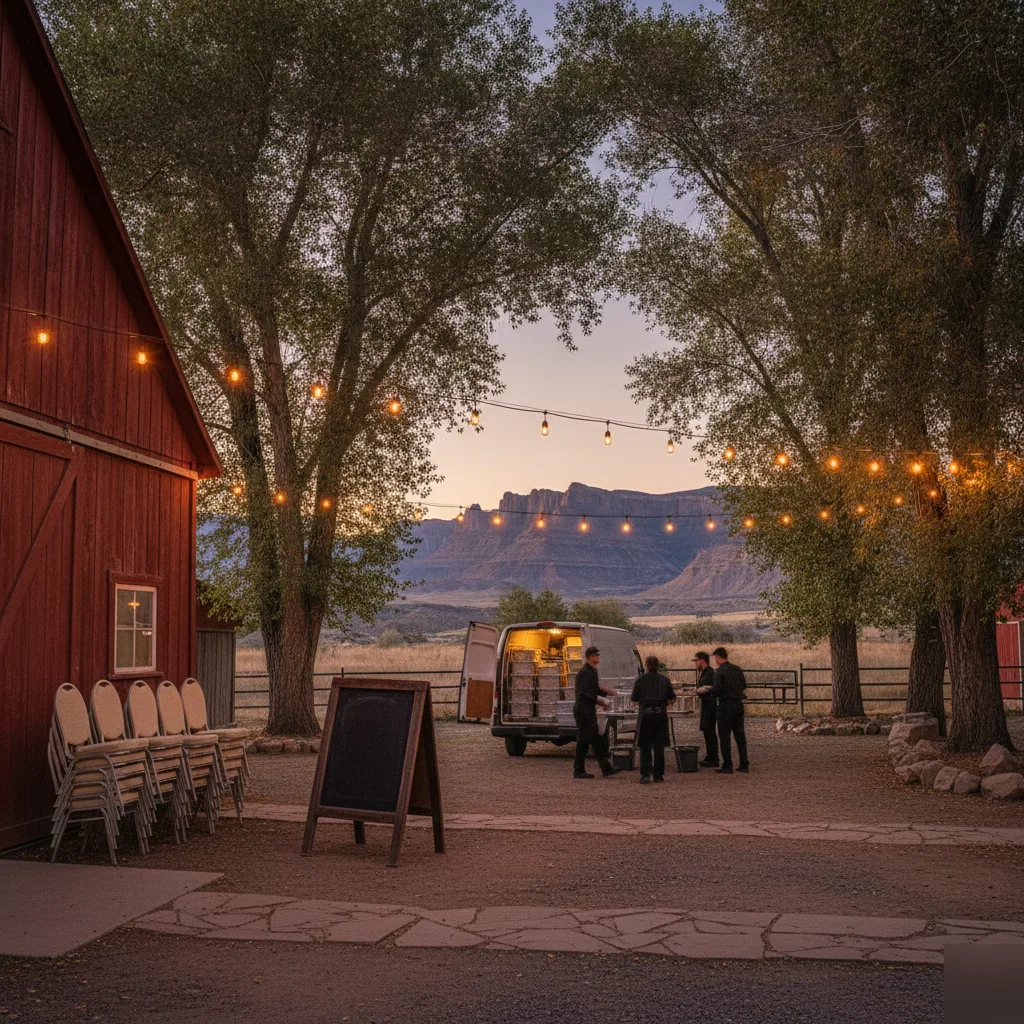
- Needs: venue rental, wedding catering, officiant, decor, seating for guests
- Wants: upgraded floral arrangements, a band instead of a playlist, extra lighting design, late-night snack stations
- Common mix-up: couples treat a wedding menu upgrade as a need when it's really a want dressed up as a priority
- Local tip: many Grand Junction couples underestimate catering costs because they forget it includes staffing and setup, not just food
One couple we worked with wanted an outdoor ceremony with a full sit-down dinner and a live band. Their first draft had the band eating up nearly a third of their total spend. Once we sorted their list into needs and wants, they saw it immediately. The band was a want. The dinner and ceremony space were needs. That one shift freed up enough room to book everything without the stress.
Why does this step get skipped so often? Because vendor conversations start with excitement, not math. And once you fall in love with an idea, it's hard to relabel it a want instead of a must-have.
This is exactly where an all-inclusive wedding package helps. When your venue rental already bundles catering, tables, and your ceremony space and reception space into one location, your needs list gets shorter and clearer from day one.
Wedding Categories in Grand Junction: Where Each Percentage Fits
So what actually lands in each bucket? Let's get specific, because vague categories won't help you plan a real budget for your day.
The 50 percent chunk, your venue and food group, covers more than just the room. Around Grand Junction, this usually means your venue rental fee, catering, your cake, and any rentals like tables, chairs, or linens that aren't already included. That's why picking a venue that bundles catering and space together can simplify your whole budget from the start. We've watched couples try to book a bare venue and then piece together a caterer, rental company, and bar service separately. It adds stress, and it almost always adds cost.
Here's a closer look at what typically falls under each slice, based on what we see couples budgeting for in the Grand Junction area:
- Venue and food (50 percent): ceremony and reception space, catering, cake, bar service, rentals like tables and chairs
- Everything else (20 percent): photography, wedding attire, florals, music or DJ, hair and makeup, transportation
- Buffer and extras (30 percent): gratuities, marriage license, invitations, favors, and a cushion for surprise costs
That middle slice, the 20 percent, is where personal taste shows up most. Some couples pour extra dollars into photography because they want every moment captured. Others save there and spend more on florals or a live band instead. There's no wrong answer, but this is the category most likely to creep past its limit if you're not watching it closely.
And the 30 percent buffer? That's the one people skip, then regret.
Grand Junction weather can be a factor here too. Outdoor ceremonies are gorgeous most of the season, but a sudden wind or afternoon shower means you might need a backup plan built into your buffer. We always tell couples planning an outdoor wedding to set aside a little extra for weather contingencies, tent rentals, or last-minute indoor moves.
One thing worth noting: an all-inclusive package can shift these percentages in your favor. When catering, rentals, and your ceremony space and reception space come from one place, you skip separate delivery fees, separate setup crews, and separate coordination costs. That 50 percent slice often ends up doing more work for you, freeing up room in your budget for the parts of the day you care about most.
How the 50/20/30 Rule Compares to the 70-10-10-10 Rule
So how does the 50/20/30 rule stack up against the 70-10-10-10 rule? Both try to solve the same problem, they give you a way to split your money without guessing. But they slice the pie very differently, and that changes how your planning feels day to day.
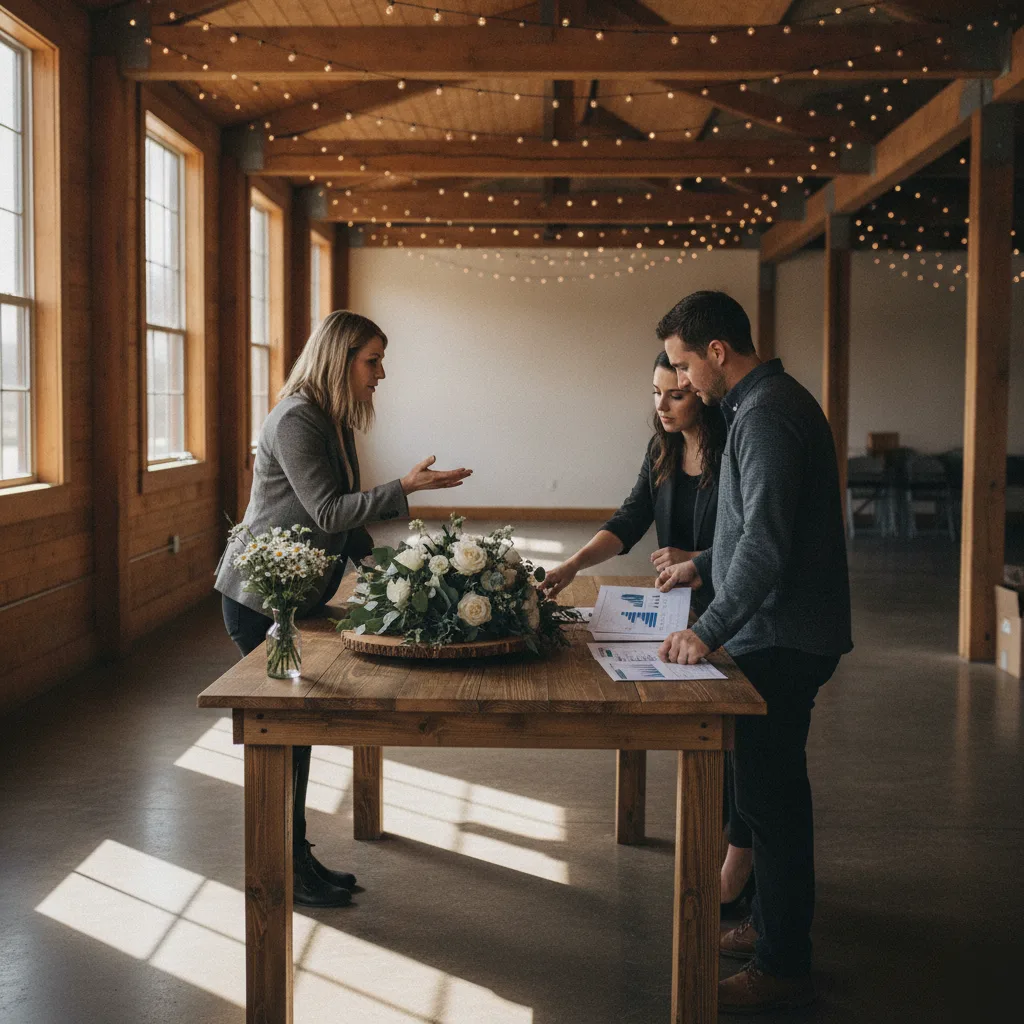
The 50/20/30 rule puts half your budget toward the venue and food. The 70-10-10-10 rule flips that math hard, sending 70 percent of your total straight to venue and catering, then splitting the rest evenly between photography, attire, and everything else. That's a much bigger chunk riding on one category.
Here's the real difference in practice. With 50/20/30, you're spreading money across more categories from the start, decor gets its own slice, planning services get their own slice. With 70-10-10-10, you're betting almost everything on one big decision, the venue, and hoping the rest falls into place with smaller leftover amounts.
We've talked with couples in Grand Junction who tried the 70-10-10-10 approach and felt boxed in fast. Once they locked in a venue that ate up most of the budget, they had almost nothing left for flowers or a dance floor. That's a tough spot to be in three months before the wedding.
This is where an all-inclusive wedding package changes the whole conversation. When your venue rental already bundles the ceremony space, reception space, catering, and even a dance floor into one line item, you're not really choosing between these two rules anymore. You get the one-big-decision simplicity of 70-10-10-10, with the built-in balance of 50/20/30, because decor, tables, and coordination are already accounted for.
- 50/20/30 rule: spreads money across venue, extras, and planning in three balanced chunks
- 70-10-10-10 rule: puts most of the budget into venue and catering, leaving smaller amounts for photography, attire, and other costs
- All-inclusive packages: combine venue, catering, and decor so you skip juggling multiple percentage rules altogether
Which one is right for you? If you like control over every category and want to shop vendors separately, the 50/20/30 split gives you more room to move. If you'd rather make one confident decision and let the details fall into place, a package built around the venue already does that job for you.
Most couples we meet don't want to become analysts. They want a clear number, a beautiful space, and a plan that holds up. That's the whole point of choosing a venue that already bundles the big stuff together, less math, more time enjoying your engagement. If you want the bigger picture, research on wedding spending suggests that how much you budget can matter less than keeping the day within your means.
Host Your Wedding at Redlands
Redlands Mesa provides space for both wedding ceremonies and recptions.