
What a Wedding Venue Rental Includes in Grand Junction
The word "rental" can mean very different things depending on which venue you are looking at. Some places rent you a room and nothing else. Others bundle the space with furniture, staff, catering, and coordination. Knowing which model you are looking at before you tour saves a lot of time and a lot of confusion.
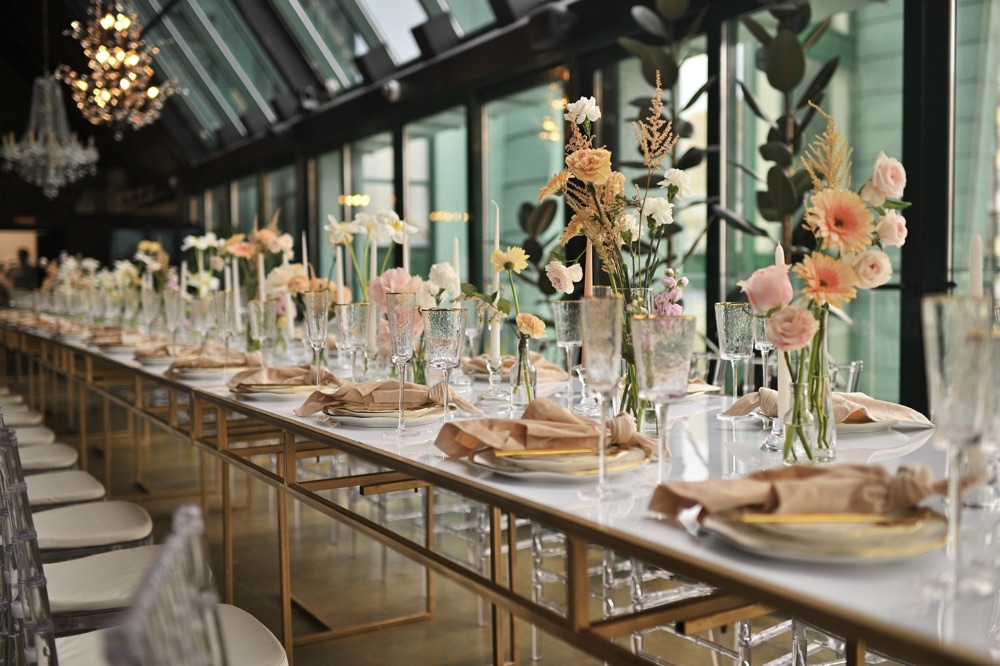
At Redlands Mesa, the venue fee includes ceremony and reception space, tables and chairs, white tablecloths, china, silverware, glassware, ceremony seating setup, full setup and teardown staff, and day-of coordination. For tented weddings of 80 or more guests, tent rental is included in the fee. Food and bar service runs through our on-site kitchen at Ocotillo Restaurant + Bar — it is not part of the venue fee, but it is handled under the same roof by the same team.
At a bare-bones venue, the rental might cover the room and nothing else. You bring in your own tables, chairs, linens, plates, flatware, and glasses from a rental company. You hire your own caterer, bartender, setup crew, teardown crew, and coordinator. Each of those is a separate contract, a separate invoice, and a separate point of failure.
Neither model is wrong. But you need to know which one you are comparing. A $1,500 rental that includes nothing is not cheaper than a $3,000 rental that includes everything — it just looks that way on the first line.
When you tour venues in the Grand Valley, bring a checklist. Ask what is in the fee and what is not. Write it down. The venue that gives you the clearest answer is usually the one that has done this the most.
How Many Hours You Should Rent a Wedding Venue
Most couples underestimate how much time they need at the venue. A wedding is not just the ceremony and dinner. It is everything before and everything after.
A standard wedding needs 8 to 12 hours of venue access. Here is where that time goes.
Vendor load-in and setup: 3 to 5 hours. Your florist, decorator, lighting team, DJ, and caterer all need to get into the space, unload their gear, and build the room before guests arrive. If the venue opens at noon and your ceremony is at 5:00, that is five hours — and for a large wedding with a full décor install, every minute gets used.
Ceremony: 30 minutes to 1 hour. Including guest arrival, the ceremony itself, and the transition to cocktail hour.
Cocktail hour: 30 to 45 minutes. Your buffer while the room flips or the reception space gets its final touches.
Reception: 4 to 5 hours. Entrance, dinner, speeches, dancing, cake cutting, last dance, and send-off.
Teardown: 1 to 2 hours. Vendors pack out. Staff clears the room. Rental items get loaded.
When you add it up, a 5:00 PM ceremony with a 10:00 PM end time needs venue access starting by noon or 1:00 PM at the latest. If your rental window is only six hours, you are going to feel it — either during setup when vendors are scrambling, or at the end of the night when the clock runs out before the last song.
At Redlands Mesa, all-inclusive wedding services Grand Junction couples book include a venue access window that covers your full event from setup through teardown. Ask about the exact start and end times during your planning meetings so your timeline fits without stress.
Venues in the Redlands and Palisade with outdoor ceremony space may need even earlier access during Grand Junction's hot summer months. Setting up shade structures, arranging ceremony seating on the lawn, and testing sound equipment all take time — and the earlier your crew can start, the less they are working in the afternoon heat.
Dedicated Venue Rental vs. Airbnb Wedding — Key Differences
Renting a house or an Airbnb for a wedding sounds appealing on paper. It is private. It is often cheaper upfront. And the photos of a mountain cabin or a riverside property look great on Instagram. But the gap between a residential rental and a dedicated wedding venue is wider than most couples expect.
Kitchen. A house has a home kitchen. A wedding venue has a commercial kitchen built to serve 100 plates in 20 minutes. If your caterer shows up to a house and the oven fits one sheet pan at a time, dinner service is going to be slow — or cold.
Power. A residential electrical panel is not designed to run a DJ's sound system, a lighting rig, a commercial coffee maker, and a full catering setup at the same time. Tripping a breaker during the first dance is not a hypothetical — it happens.
Restrooms. A house with two bathrooms does not comfortably serve 80 guests. You end up renting portable restrooms and parking them in the driveway. A dedicated venue has enough restroom capacity for your full guest count, indoors and climate-controlled.
Insurance and permits. Dedicated wedding venues in Mesa County carry event insurance and the permits needed to host large gatherings with food and alcohol service. A residential property usually does not. If something goes wrong — a guest injury, a noise complaint, an alcohol-related incident — the liability picture is very different.
Noise and neighbor rules. Mesa County short-term rental rules and HOA restrictions may limit your guest count, shut down amplified music at a certain hour, or ban alcohol service entirely. A permitted Grand Junction wedding venue has already cleared those hurdles.
Cleanup. At a venue like Redlands Mesa, the teardown crew clears the space after the event. At a rented house, you or your family are scrubbing counters and hauling trash bags at midnight — or paying a cleaning crew on top of the rental.
An Airbnb can work for a very small gathering where you are handling every detail yourself. But for a wedding with 50 or more guests, food service, a bar, and a dance floor, a dedicated venue gives you the bones that a house simply does not have.
How to Compare Venue Rental Terms Before Signing in Grand Junction
When you are choosing between two or three venues, the rental fee is just one number. The terms around that number tell you whether the deal is actually good.
Here is a short list to compare side by side.
Included hours. How long is the rental window? Does it cover vendor setup and teardown, or just the event itself? If setup time is extra, add that cost.
Overtime rate. What happens if the reception runs 30 minutes past the end time? Some venues charge by the hour. Some charge a flat overtime fee. Some do not allow overruns at all. Know the number before the night starts.
Furniture inventory. Are tables, chairs, and linens included? How many of each? If the venue provides 80 chairs and you need 120, where do the extra 40 come from and what do they cost?
Vendor policy. Can you bring any licensed vendor, or does the venue require a preferred list? At Redlands Mesa, food and bar are handled in-house by Ocotillo Restaurant + Bar. Photography, florals, music, and other services can come from any licensed vendor in the valley. Some venues restrict every category — ask before you sign so you know where your choices are open and where they are not.
Deposit and payment schedule. How much is the deposit? Is it refundable? When are the remaining payments due? At Redlands Mesa, a $2,000 non-refundable deposit holds the date. Seventy percent of the estimated total is due 60 days before the event. The final balance and final guest count are due 14 days out.
Cancellation terms. What happens if you need to cancel or change the date? Every venue handles this differently. Read the cancellation clause carefully — it is the part of the contract nobody thinks about until they need it.
Noise and curfew limits. Does the venue have a hard stop time for music? Are there decibel limits? Grand Junction city noise rules apply within municipal limits. Venues in the Redlands or unincorporated Mesa County may have more flexibility — but confirm in writing.
The venue with the lowest number on the first page is not always the best deal. The venue with the clearest terms usually is.
Matching Your Guest Count to the Right Rental Space
A room that is too big feels empty. A room that is too small feels cramped. The goal is a space that fits your guest count in both ceremony rows and reception tables with room left for a dance floor, a bar station, and paths for guests and staff to move.
At Redlands Mesa, the space breaks down like this. Intimate weddings of up to 80 guests work indoors or on the patio without a tent. The room feels warm and full at 40 to 60 people — no empty corners, no wasted square footage. Tented weddings on the event lawn hold 80 to 300 guests, with the indoor clubhouse available as a cocktail or lounge space alongside the tent.
When you tour a venue, ask two capacity numbers — ceremony and reception. They are not always the same. A room that holds 120 in reception rounds with a dance floor might only hold 100 in ceremony rows with an aisle. Mesa County fire and occupancy codes set hard limits on both, and you need your actual guest count to fit in both setups.
Also think about flow. Where is the bar? Can guests reach it without squeezing between tables? Where are the restrooms? Is there a clear path from the dance floor to the patio for people who need air? A floor plan that looks fine on paper can feel tight in person if the traffic paths are not accounted for.
At Redlands Mesa, our coordinator walks you through the floor plan during planning and helps you choose the table layout that fits your headcount, your style, and the way people actually move through a room.
One more thing — do not book a 200-person venue for a 50-person wedding just because you like the property. The extra space will make the room feel hollow, the conversation will echo, and your guests will spread out instead of gathering close. A smaller room with 50 people feels like a party. A cavernous hall with 50 people feels like a Tuesday.
Seasonal Timing That Affects Availability and Rental Flexibility
When you book matters almost as much as where you book. Wedding planning in the Grand Valley means demand follows the weather — and the weather in Grand Junction follows a pattern every local knows well.
September and October are the highest-demand months. The heat breaks. Afternoons settle into the 70s and low 80s. The cottonwoods along the Colorado River turn gold. The orchards in Palisade are in harvest. The Bookcliffs catch low afternoon light that turns everything warm. These weekends fill 12 to 14 months ahead. If you want a fall Saturday at Redlands Mesa, start the conversation early.
May and June are the second-busiest window. Long days, green fairways, and comfortable temperatures before the real summer heat sets in. These dates book 10 to 12 months out for popular Saturdays.
July and August are hot — afternoon highs pushing 95 to 100 degrees. Couples who book summer dates often shift to evening ceremonies to dodge the worst of it. The heat keeps demand slightly lower than fall, which means more date flexibility and sometimes more room to negotiate timing.
November through February are the quietest months. Venue fees at Redlands Mesa drop to winter rates — $2,000 for intimate weddings. Dates are easier to lock down with six to eight months of lead time. The mesa and the Monument look just as dramatic in winter light, and the cooler air makes indoor-outdoor flow comfortable even in December.
March and April sit in shoulder season. Rates fall between peak and winter. The valley starts greening up. The weather is mild. And the competition for dates is lighter than fall.
The earlier you book, the more options you have — not just in dates, but in layout, timing, and the flexibility to build the day you actually want. Waiting until six months out for a September Saturday usually means settling for what is left. Planning 12 months ahead means choosing what is best.
Host Your Wedding at Redlands
Redlands Mesa provides space for both wedding ceremonies and recptions.