
What Professional Event Decoration Covers at a Grand Junction Wedding
There is a line between what the venue gives you and what makes the room feel like yours. A professional decorator fills that gap.
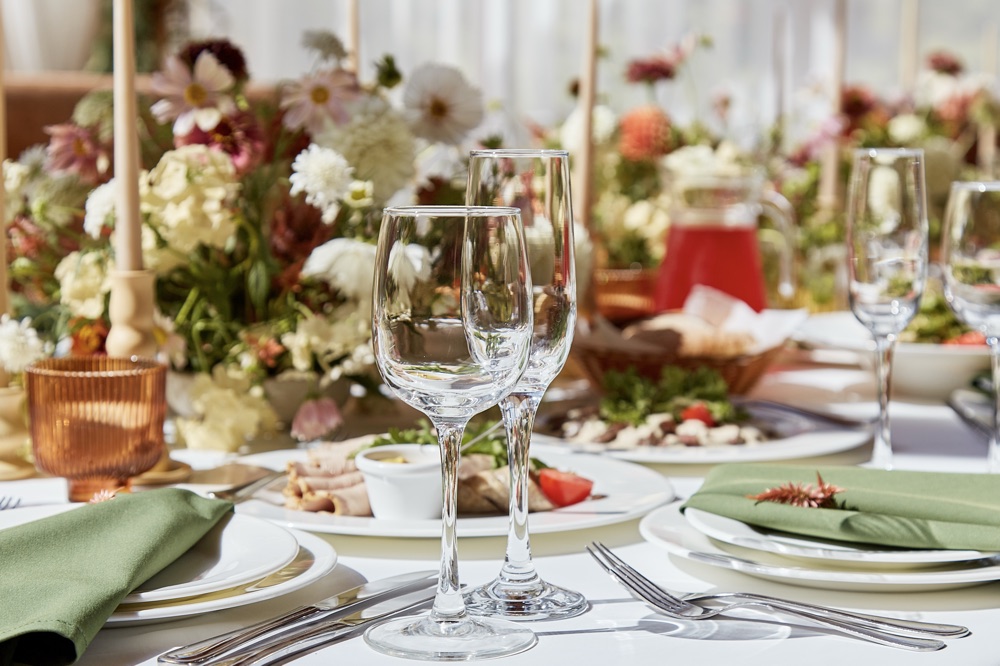
At Redlands Mesa, your venue fee includes tables, chairs, white tablecloths, china, silverware, and glassware. That is a clean, set table. But the centerpieces, the runners, the candles, the signage, the flowers, the fabric, and all the small details that make your guests say "this is so them" — that is the decorator's work.
Full-service decoration starts with a sit-down. You talk about your colors, your style, what you have been saving on Pinterest, and what you know you do not want. The decorator visits the venue, looks at the ceiling, the walls, the light, and the bones of the room. Then they build a plan — where to source materials, how to lay things out, when to install, and when to break it all down.
On the wedding day, the decorator shows up hours before guests arrive and builds the room from nothing. When they finish, every table is set, every candle is lit, every sign is in place, and the space looks like the version you said yes to. After the last guest leaves, they come back and take it all down.
Grand Junction has all kinds of venues. A brick building downtown feels different from an open lawn in the Redlands or a vineyard patio out in Palisade. Colorado wedding services that understand regional style work with what is already in the room instead of covering it up. The best ones treat the beams, the stone, and the windows as part of the design — not something to hide behind fabric.
Wedding Décor Trends Shaping 2026 Celebrations on the Western Slope
Trends come and go. But the ones sticking around in 2026 feel less like a fad and more like couples finally trusting their own taste — especially here on the Western Slope.
Earthy palettes are everywhere. Terracotta, sage, warm clay, dusty rose, and muted gold have pushed out the bright metallics and blush-and-silver combos that ruled for the last few years. These colors feel natural in the Grand Valley because they already exist outside the window. The Bookcliffs glow terracotta at sunset. The sage and rabbitbrush growing on the mesa match the greens showing up on linen napkins and bridesmaid dresses. When your color palette matches the landscape around you, the whole day feels connected instead of forced.
Mixed materials over matching sets. Couples are stepping away from everything-matches-perfectly tables. Instead, they are layering raw wood chargers with linen runners, stone candle holders, dried floral, and mismatched vintage glassware. It looks warm, textured, and real. It feels like somebody's home, not a showroom. That fits the Western Slope — honest and a little rugged without being sloppy.
Hands-on details. This is the biggest shift we see. Couples want guests to do more than look at the décor. A scent station with local Palisade lavender. A cocktail-hour table where guests write notes on handmade paper. Place settings that feel different under your fingers — rough linen, smooth stone, soft velvet. The room becomes something people remember with more than just their eyes.
Less stuff, more impact. The days of covering every surface with filler are fading out. Couples are choosing a few strong statements — one big floral piece, one stunning table runner, one bold lighting choice — and letting the rest of the room breathe. At a venue like Redlands Mesa, where the golf course and the Monument are right outside the windows, that makes sense. The view is doing half the work already. Let it.
Core Design Rules That Keep Your Wedding Décor Balanced
You do not need a design degree to make your wedding look great. A few simple rules keep things balanced whether you hire a pro or do some of it yourself.
Pick three colors and stick with them. One main color, one accent, and one neutral. Every linen, flower, candle, and ribbon fits into one of those three. When you start adding a fourth and fifth, the room gets busy and the eye does not know where to look. Three keeps things clean.
Use odd numbers. Three candles on a table look better than four. Five bud vases look better than six. One big centerpiece with two smaller pieces beside it looks better than two matching arrangements side by side. Odd numbers feel natural and relaxed. Even numbers feel stiff. It sounds like a made-up rule until you see it in a room — then you cannot unsee it.
Mix your heights. A table where everything sits at the same level looks flat. Put a tall candle next to a low flower arrangement. Set a raised centerpiece with small votives around the base. That mix gives the table depth and makes it feel full without being crowded.
Let the venue help. This is where a lot of couples in the Grand Valley overthink it. If your venue has exposed beams, big windows, or stone walls, those features are already part of your design. You do not need to cover them or compete with them. At Redlands Mesa, the views of the golf course and the Monument do a lot of the work on their own. Clean tables, good lighting, and a few well-placed floral pieces let the space shine.
Edit before you add. If something feels like too much, it probably is. Pull one piece off the table. Take one sign away from the entrance. Step back and look at the whole room, not just the individual pieces. The best-decorated weddings we have seen at Redlands Mesa were not the ones with the most stuff. They were the ones where everything in the room had a reason to be there.
How Décor Gets Installed and Removed on Your Wedding Day
Décor setup is one of the first things that happens on your wedding day — and it touches almost every surface in the room. Here is how the timing works.
Most decorators need four to six hours before guests show up. That covers unloading, placing centerpieces, setting each table, hanging anything that goes overhead, lighting candles, spacing everything out, and doing a final walkthrough with the couple or planner for the okay. Bigger installs — ceiling draping, floral arches, hanging greenery — can push that window longer.
The decorator usually works at the same time as the florist, the lighting team, and the caterer. Everyone needs the room at once, so the schedule has to be mapped out ahead of time. At Redlands Mesa, our events coordinator builds a full vendor load-in timeline so the decorator is not waiting on the florist and the caterer is not blocked by a ladder in the middle of the dining room.
One thing we always tell couples: have your decorator visit the venue in person at least a month before the wedding. Not a video call. Not a photo tour. An actual visit where they stand in the room, measure the tables, check the walls, and look at how the light falls. That visit catches problems early — a ceiling hook that cannot hold a heavy piece, a table layout that does not leave room for a runner, a wall that will not take tape without peeling the paint.
After the reception, breakdown goes faster — usually one to two hours. The decorator picks up their pieces, packs everything, and clears the space. At Redlands Mesa, our teardown crew works alongside the décor team so the whole venue gets cleared in one pass.
The best install jobs are the ones nobody notices. Guests walk in, the room takes their breath away, and nobody thinks about the five hours of work that made it happen. They just feel it. That is the whole point.
Matching Your Decoration Style to Your Grand Junction Venue Space
The smartest décor plans start with the room — not with a mood board.
Every venue in the Grand Valley has its own personality. A downtown Grand Junction space with brick walls and high ceilings wants a different look than an open patio in Palisade wine country. A tented reception on a golf course lawn needs a different touch than a cozy clubhouse dinner for 40. The décor should feel like it belongs in the space — not like it was dropped in from someone else's wedding.
Indoor spaces with character. If the room has strong bones — timber beams, stone walls, big windows — let them show. A quiet palette with soft textures, warm lighting, and simple wall treatment lets the building be part of the design. At Redlands Mesa, the indoor space has golf course and Monument views through the windows. That backdrop does not need fabric panels or wall art fighting for attention. Clean tables, warm light, and a few good floral pieces let the room speak for itself.
Outdoor and tented spaces. An outdoor wedding is already decorated by the landscape. The red rock, the green fairway, the big sky — that is your backdrop. The décor job is to frame it, not replace it. Low centerpieces keep the sightlines open so your guests can see the view. Bistro lights overhead add warmth without blocking anything. Earthy linen and dried floral tie the table to the ground under it. On the Western Slope, overdoing outdoor décor is worse than underdoing it. If your guests are trying to watch the sunset over the Monument and a giant floral arch is in the way, the arch lost.
Small and intimate spaces. A room with 30 guests does not need a massive hanging piece over the dance floor. Scale the décor to the headcount — and let seating chart planning guide how you space the tables so the room feels full without feeling crowded. One strong centerpiece per table, a small arrangement at the door, and warm candlelight across every surface fill a small room with mood without making it feel packed.
The right decorator asks about your venue before they ask about your Pinterest board. That tells you they know what they are doing.
What to Confirm with Your Venue Before Finalizing a Décor Plan
Before your decorator orders a single flower or cuts a yard of fabric, check these things with the venue. A quick conversation now saves a problem on setup day.
Wall rules. Can you hang frames, mirrors, or signs? Are nails, screws, or sticky hooks allowed? Some spots — especially older buildings downtown — do not allow anything that could mark up brick or plaster. Ask before the decorator plans a wall-mounted seating chart or photo display.
Candle policy. Candles are one of the most popular décor pieces at weddings — and one of the most regulated. Some venues allow open flame with no limits. Some allow candles only inside glass holders. Some ban real flame and require LED instead. At Redlands Mesa, ask our coordinator about the flame rules during your planning meetings so your candle order lines up with the policy.
Ceiling rigging. If you want anything hanging from above — greenery, fabric, lights, a floral install — ask where the rigging points are and how much weight they hold. Not every ceiling can support a 40-pound garland. Your decorator needs this info early so they can plan around it.
Furniture rules. Can the decorator move the venue's tables and chairs, or is the layout set? Can they bring in their own furniture — a lounge couch, a vintage bar cart, a dessert shelf — or are outside pieces not allowed?
Power. If the décor plan includes lit signs, LED pieces, or anything that plugs in, the decorator needs to know where the outlets are and how much power each circuit can handle.
Confetti and loose items. Some venues do not allow glitter, confetti, rice, or loose flower petals because of cleanup. Ask before your decorator plans a confetti toss or a petal-lined aisle.
At Redlands Mesa, our coordinator goes through all of this with you during planning. We would rather answer 20 questions in a meeting than deal with one surprise on your wedding morning.
Host Your Wedding at Redlands
Redlands Mesa provides space for both wedding ceremonies and recptions.