
Single-Venue Weddings in Grand Junction: Large Groups?
The word "large" means different things depending on where you are. A 200-person wedding in Denver barely raises an eyebrow. That same guest count in Grand Junction changes your entire planning approach.
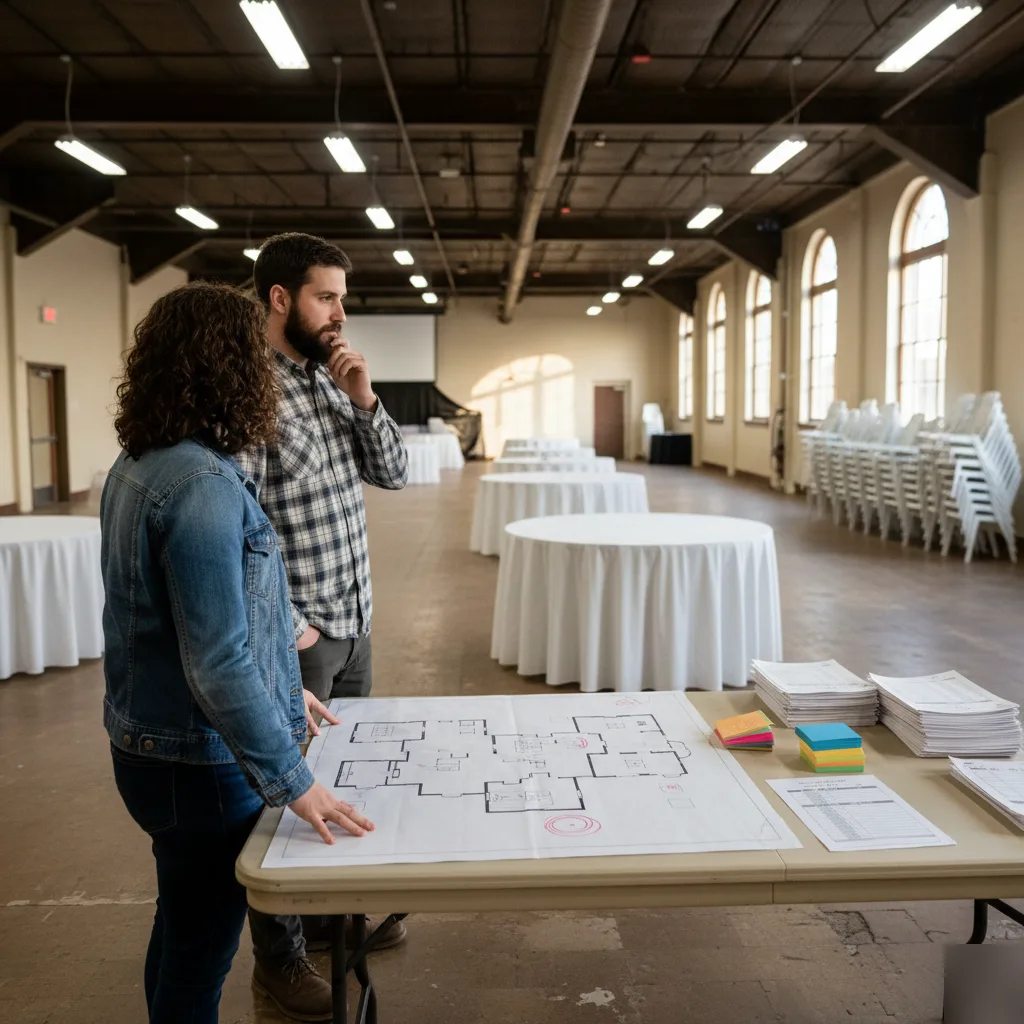
Most couples we work with consider anything over 150 guests a large wedding. But here in the Grand Valley, the average guest list runs closer to 100-120 people. So when you're pushing past 150, you're already in a different category of event. You need more food, more seating, more parking, and real room for people to move around without feeling packed in.
Local Guest Count Ranges
We see three general tiers when couples start planning a wedding where the ceremony and reception share one location:
- Intimate: Under 75 guests. These feel personal and relaxed, easy to manage at almost any venue in Grand Junction.
- Mid-size: 75 to 150 guests. This is the sweet spot for most single-venue weddings. Plenty of room for a dance floor, seated dinner, and cocktail space.
- Large: 150 to 300 guests. This is where planning gets real. You need a venue that can handle catering at scale, has enough restroom facilities, and won't feel cramped during the reception.
That third tier is where most questions come up. And it's where the biggest mistakes happen too.
Why Grand Junction Is Different
Grand Junction isn't a massive metro area. That's part of why people love getting married here. The red rock views along the Colorado National Monument, the vineyards near Palisade, the wide-open sky. It all feels special.
But smaller cities mean fewer mega-venues. You won't find convention-center-style ballrooms on every corner. The venues that do handle large guest counts tend to be outdoor event spaces or spots with flexible indoor-outdoor layouts that spread guests across multiple areas naturally.
One thing most people don't realize until they start touring: fire code capacity and comfortable capacity are two very different numbers. A room might legally hold 250 people. But once you add tables, a dance floor, a DJ setup, and a buffet line, that room feels tight at 180. We've seen couples book based on maximum capacity and then scramble to rearrange everything three weeks out.
Always ask about usable square footage. Not just total capacity.
The Real Number That Matters
Here's something we tell every couple with a big guest list: your RSVP rate matters more than your invite count. The Knot's 2023 Real Weddings Study found the average decline rate sits around 15-20 percent. Here in Grand Junction, we've noticed it can run a bit higher when guests are traveling from the Front Range or out of state, the drive over I-70 through Glenwood Canyon alone gives some people pause.
So if you're inviting 250 people, you might seat 200. Maybe 190. That gap changes your floor plan, your catering order, your seating chart. It changes everything.
Plan your venue size for about 85 percent of your invite list. That gives you breathing room without wasting space. And if more people say yes than you expected, a good venue team can adjust layouts quickly.
The takeaway is simple. "Large" in Grand Junction starts around 150 guests, and it requires a venue built to handle that scale without cutting corners on comfort.
Single-Venue Weddings Solve Real Logistics Problems
You've got 150 guests arriving from out of town. Your ceremony is at one location near the Colorado National Monument. Your reception is twenty minutes away in downtown Grand Junction. Now half your guests are lost, the other half are stuck in traffic on North Avenue, and your photographer is racing between two spots trying not to miss anything.

That's the reality of a split-venue wedding with a big guest list.
Single-venue weddings fix this problem at the root. When your ceremony and reception happen in one place, you remove the biggest source of stress for large events. No one needs directions to a second location. No one slips out during the gap and doesn't come back. Your timeline stays tight, your guests stay happy, and you actually get to enjoy your day.
The Transportation Problem Gets Worse With More Guests
We see this all the time with couples planning for 100-plus guests. They don't think about what happens between the ceremony and reception. With a small wedding, maybe 30 people can carpool without much trouble. But when you're hosting 150 or 200 guests in Grand Junction, the math changes fast.
Here's what stacks up against you with a two-venue setup:
- Guests unfamiliar with Grand Junction get lost between locations, especially near the Redlands or Orchard Mesa areas where GPS can be unreliable
- Elderly or mobility-limited guests struggle with extra travel, parking twice, and walking into a second venue
- Your wedding timeline loses 45 minutes to an hour just from transit and regrouping
- Vendors like caterers and decorators have to set up at two separate sites, which adds cost and confusion
A single-venue wedding removes every one of those headaches. Your guests walk from the ceremony space to the reception area. Your vendors set up once. And you don't lose a single moment of your celebration to logistics.
One Location Keeps Your Big Guest List Together
Large weddings have a quiet problem. People drift away. If there's a gap between events, some guests head to a restaurant, some go back to their hotel, some just leave. According to The Knot's 2023 Real Weddings Study, the average American wedding hosts around 117 guests. Once you're above that number, keeping everyone engaged matters even more.
Keeping everything in one place solves this. Your cocktail hour flows right into dinner. Dinner flows into dancing. Nobody has to decide whether it's worth driving across town for cake.
We've watched couples host 200-plus guests at a single venue where everything moved from an outdoor wedding ceremony to an indoor reception with a dance floor. The guests never had to leave the property. That's the kind of experience that makes a big wedding feel effortless instead of chaotic.
If you're planning a large wedding in Grand Junction and wondering how to keep things simple, choosing a venue that handles both your ceremony and reception is the smartest first step. It solves problems you haven't even thought of yet.
And the peace of mind alone is worth it.
Your florist arrives once. Your DJ sets up once. Your events coordinator manages one space instead of juggling two. For big guest counts, that simplicity isn't optional. It's a necessity.
The Ceremony-to-Reception Flow Is Where Large Counts Get Tricky
Here's what most couples don't think about until it's too late. The ceremony itself is usually the easy part. You line up chairs, everyone faces forward, and the space works. But what happens in that 30-to-60-minute window after you say "I do"? That is where large guest counts at a single-venue wedding either flow smoothly or fall apart.
We see this play out all the time.
A couple books a venue for 200 guests. The ceremony space looks perfect. The reception room is gorgeous. But nobody planned for the gap between the two. Suddenly you've got 200 people standing around, unsure where to go, while the venue team flips the room. That's not a great feeling for anyone.
Why the Flip Matters So Much
At a single-venue wedding, your ceremony and reception happen in the same location. Sometimes the same room. That means chairs need to move, tables need to come out, centerpieces go up, the dance floor gets set. With 50 guests, this takes maybe 15 minutes. With 150 or more, the setup is bigger and the flip takes longer.
The key is a separate space where guests can go during the room flip. A cocktail reception area works perfectly for this. Guests grab drinks, enjoy appetizers, mingle. Meanwhile, your venue team handles everything behind the scenes. No stress for you, no confusion for your guests.
What to Look for in Grand Junction Venues
Not every venue has separate areas for this. Some single-venue locations in Grand Junction offer both indoor and outdoor event space, so guests can move from an outdoor wedding ceremony to an indoor cocktail hour while the main room gets set. That's the right setup for large counts.
Here's what makes a venue work well for 150-plus guests:
- A separate cocktail reception space that holds at least 75 percent of your guest count comfortably
- A venue team that handles day-of coordination so the flip stays on schedule
- Clear signage or staff directing guests between spaces
- A wedding timeline coordination plan built around your specific guest count
Without these pieces in place, you're asking guests to wait in a parking lot or huddle in a hallway. That kills the energy of your day fast.
The Timeline Changes With More Guests
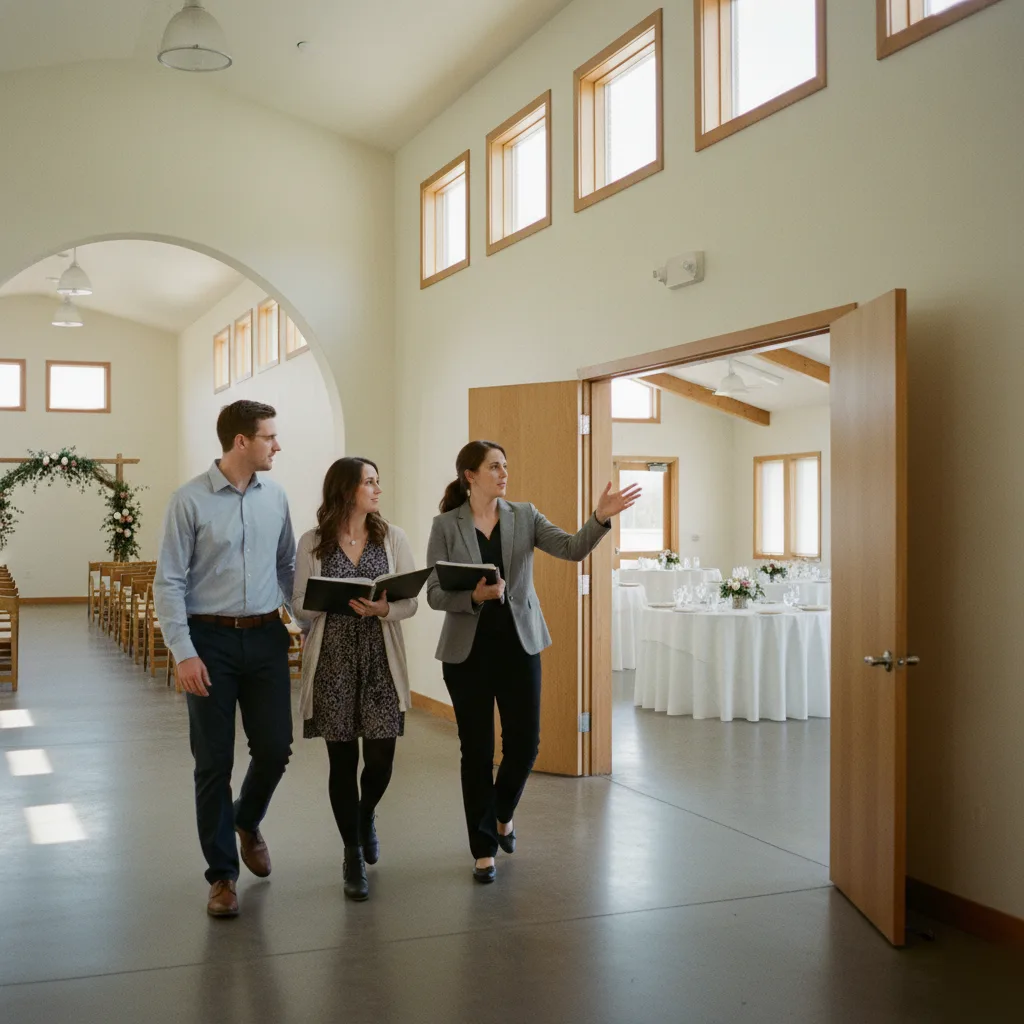
A 75-person wedding might need a 30-minute cocktail hour. A 200-person wedding? You'll want closer to 60 minutes. More guests means more setup, more table arrangements, more seating chart details to finalize. Your timeline has to account for all of it.
One scenario we've worked through: a couple planned a 180-guest wedding near the Redlands. They originally scheduled a 20-minute cocktail break. Once we mapped out the actual room flip, we adjusted to 45 minutes. That extra time made everything feel relaxed instead of rushed, and their guests never noticed anything was happening behind the scenes.
So yes, single-venue weddings absolutely work for large guest counts. But only when the plan matches the scale. A venue that puts your ceremony and reception in one place, with a separate cocktail area and a team handling coordination, is the setup that makes 150, 200, even 250 guests feel effortless.
If you're trying to picture how this would work for your wedding, our events coordinator can walk you through the layout options and timing. Take a look at our wedding venue page to see the spaces available and how they connect.
Host Your Wedding at Redlands
Redlands Mesa provides space for both wedding ceremonies and recptions.