
Do Indoor Wedding Venues in Grand Junction Include Heating and Air Conditioning?
Yes, most indoor wedding venues in Grand Junction include heating and air conditioning. But "climate control" doesn't mean the same thing at every location. The system behind the walls matters more than you'd think.
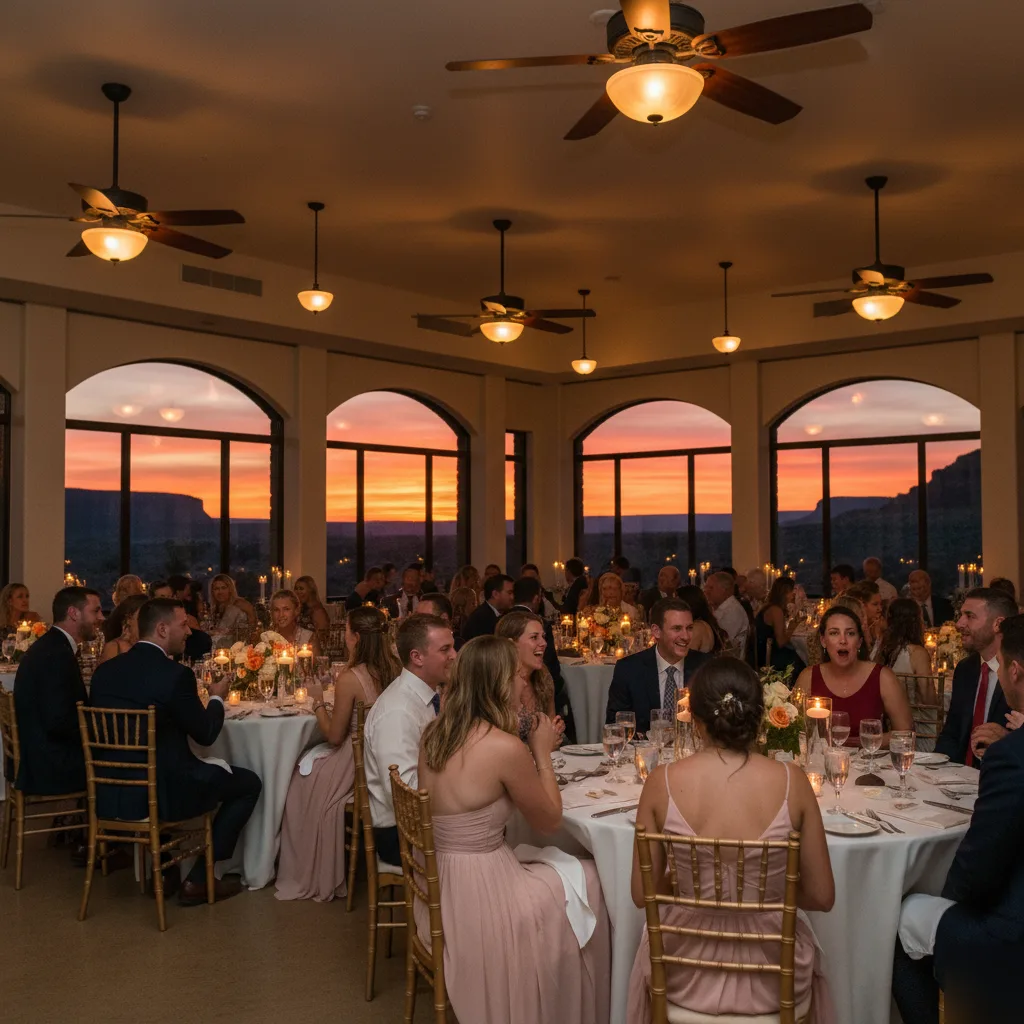
Some venues run central HVAC systems. These keep every room at a steady temperature, run quietly, and handle Grand Junction's dry summer heat without much trouble. You'll find central systems in newer buildings and venues built for events.
Other spots rely on older setups — wall-mounted units, swamp coolers, radiant heat. These can work fine for a small weekday lunch. Pack 150 guests onto a dance floor in July and that's a different story.
The Three Most Common Systems You'll Run Into
- Central forced-air HVAC. This pushes heated or cooled air through ducts in the ceiling and walls. It's the most dependable option for large groups. Most modern indoor wedding venues use this.
- Evaporative coolers (swamp coolers). These are common across western Colorado because the air is so dry. They work by pulling outside air through wet pads. They cool well in low humidity but struggle when monsoon moisture rolls in during late July and August.
- Portable or supplemental units. Some venues bring in extra heating or cooling for big events. Space heaters in winter, portable AC units in summer. They get the job done but add noise.
Here's what most couples miss. The type of system affects your guest experience in ways beyond temperature. Swamp coolers add humidity to the air. That changes how flowers hold up. It changes how your hair looks by hour three. Portable heaters create hot spots near some tables and leave others cold.
We've seen couples tour a venue on a quiet Wednesday morning and love the temperature. Then their Saturday wedding hits with 120 guests, a DJ, and a packed room. Body heat alone can raise indoor temps by 5 to 10 degrees. The system that felt perfect during a walkthrough can't always keep up on the actual day.
Why Grand Junction's Climate Makes HVAC a Non-Negotiable
Grand Junction sits in a high desert valley. Summer days push past 100°F. Winter nights drop well below freezing. If you're planning an indoor wedding here, heating and air conditioning aren't extras. They're the baseline.
We've worked events in Grand Junction where the morning started at 45°F and the afternoon hit 88°F — same day. Guests showed up in jackets and ended up fanning themselves with their programs by the ceremony. Without a solid HVAC system, that kind of swing turns a beautiful day uncomfortable fast.
Summer Heat in the Grand Valley
June through September is peak wedding season. It's also when Grand Junction regularly sees temperatures above 90°F. Average July highs in the Grand Valley sit around 95°F according to the National Weather Service.
Inside a building full of people, lights, and a packed dance floor, it gets even hotter. Your guests generate heat. So do the lights. So does the kitchen if catering is on-site. Without dependable air conditioning, an indoor wedding venue gets stuffy within the first hour. People leave early, skip the dance floor, and remember the heat more than the vows.
Winter Cold Along the Colorado River
Winter weddings in Grand Junction have their own charm. Snow on the Book Cliffs, crisp air, holiday lights around the Redlands. But December and January lows often dip into the teens.
We see this more than you'd think. Couples fall in love with a venue during a summer tour and don't ask about heating. Then their December rehearsal dinner rolls around and the building can barely hold 60°F. Guests keep their coats on. Flower arrangements behave differently in cold air. The whole feel changes.
Look for forced-air systems or radiant heating that keeps the space consistent throughout a four-hour reception.
Shoulder Seasons Are Tricky Too
March, April, October, November — these months fool people. A sunny afternoon near Palisade might feel like 70°F. But by the time your evening reception is underway, it's dropped to the low 40s. An indoor venue with both heating and air conditioning can adjust in real time.
Here's what matters most when evaluating climate control at any indoor wedding venue in Grand Junction:
- The system should cool a full-capacity room in summer, not just an empty one during your tour
- Heating needs to maintain a steady temperature for hours, not cycle on and off loudly
- Thermostat access or a dedicated facilities person should be available on your wedding day
- Ventilation matters separately from temperature, especially with large guest counts
Don't just take the venue's word for it. Ask to visit during a season close to your wedding date. A venue that feels perfect in October might tell a different story in July.
The Swamp Cooler Problem Grand Junction Couples Need to Know
A lot of older buildings in Grand Junction still run on evaporative coolers instead of true air conditioning. That's fine for a quiet office on a Tuesday. It's not fine for 150 guests in formal wear on a July Saturday.
Evaporative coolers work by pulling dry air through wet pads. They add moisture to cool things down. In our high-desert climate, they can do an okay job in small spaces with low occupancy. A wedding reception is neither small nor low occupancy.
Why Swamp Coolers Struggle at Events
Every person in a room generates roughly 400 BTUs of heat per hour, according to the U.S. Department of Energy. Pack 120 guests into a banquet room and you've added the equivalent of a space heater running full blast. Swamp coolers can't keep up with that load.
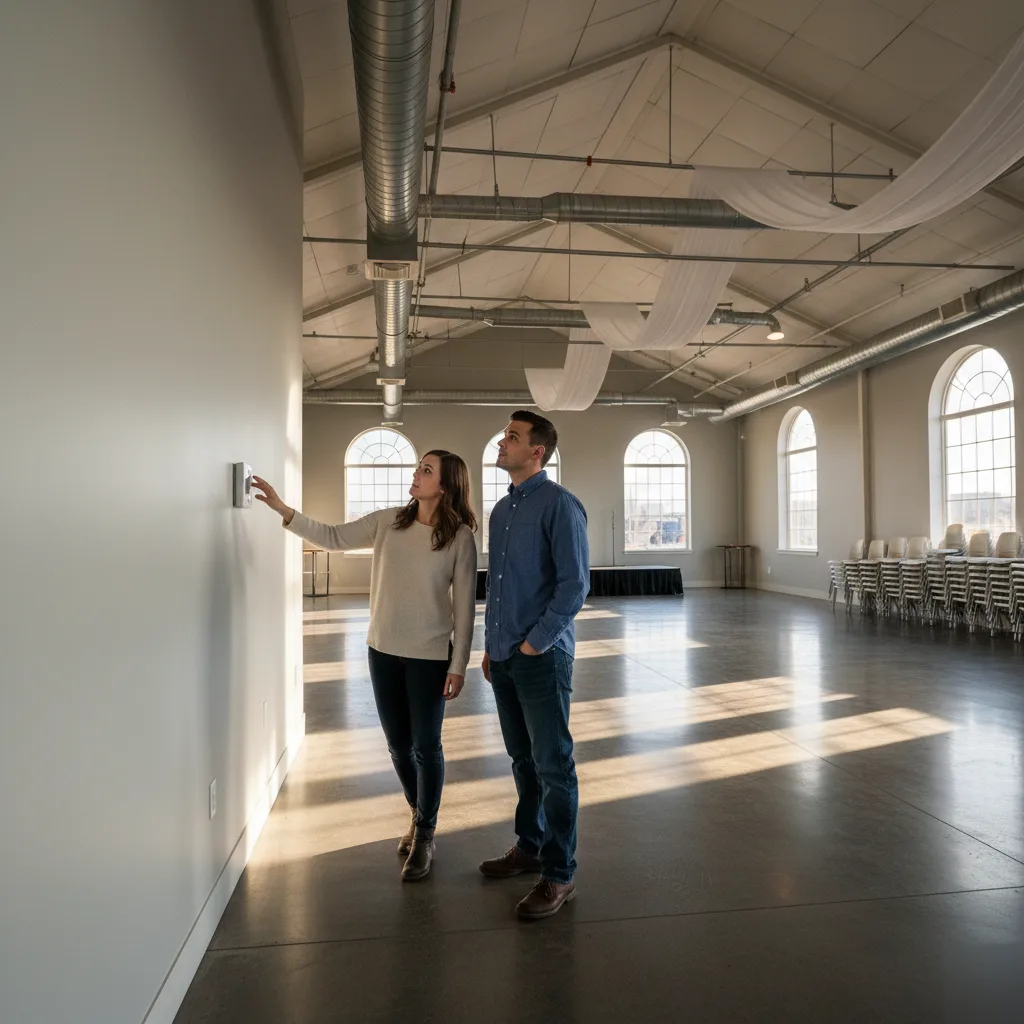
Here are the specific problems couples run into:
- The room feels sticky and warm because evaporative cooling adds humidity that guests are also producing
- Doors opening and closing for caterers, photographers, and late arrivals let hot outside air flood in constantly
- Dance floors generate more body heat, turning the reception space into a sauna by 9 PM
- Swamp coolers need windows or doors cracked open to work, so you lose any sealed-room cooling advantage
We've seen couples tour a venue on a quiet weekday and think the temperature feels great. Then their actual wedding day hits with all their guests inside. That gap between an empty tour and a full event catches people off guard every summer.
What to Ask Before You Book
Don't just ask "do you have AC?" Ask what kind. There's a real difference between a swamp cooler and a refrigerated HVAC system. A refrigerated system pulls heat out of the air and removes humidity. It works no matter how many people are in the room.
When you're visiting an indoor wedding venue in Grand Junction, ask these questions:
- Is the cooling system refrigerated air conditioning or evaporative?
- What's the system's capacity relative to the room's max guest count?
- Can the venue run heating and cooling in the same day for shoulder-season weddings in April or October?
- Is there a backup plan if the system goes down during an event?
Grand Junction's summer highs regularly top 95 degrees. Our monsoon season in late July and August bumps humidity up enough that even well-maintained swamp coolers lose their edge.
Pay attention to the building's age when comparing indoor wedding venues near the Redlands or downtown. Newer construction almost always has refrigerated systems. Older converted spaces might still rely on evaporative cooling. That one detail can shape your entire guest experience.
The best move is to visit during a warm afternoon and feel the space for yourself. Nobody remembers perfect climate control. But everyone remembers being uncomfortable.
Host Your Wedding at Redlands
Redlands Mesa provides space for both wedding ceremonies and recptions.