
Grand Junction Venues & Outside Catering: What to Know
You'd think it's simple. A venue says "outside catering allowed," and you picture any food truck, any restaurant, maybe your aunt's famous tamales showing up in a slow cooker. But the reality is more layered than that, and we see couples caught off guard by this all the time.
"Outside catering allowed" usually means the venue lets you hire a licensed caterer who isn't part of their in-house team. That's the core idea. But every venue in Grand Junction handles it differently, so ask the right questions before you sign anything.
The Fine Print Matters
Most affordable wedding venues attach conditions to outside catering. Some are small. Some change your whole plan. Here are the most common conditions we see couples run into:
- Kitchen access rules: Some venues let your caterer use the on-site kitchen, others only allow drop-off service with warming equipment.
- Insurance requirements: Your outside caterer may need their own liability insurance, sometimes up to one million dollars in coverage.
- Alcohol restrictions: Even if food is open, bar service might still need to go through the venue's own staff or a licensed bartender they approve.
- Cleanup expectations: You or your caterer might be responsible for full kitchen cleanup, not just clearing tables.

None of these are deal-breakers. You need to know about them early, though. We've watched couples book a caterer first, then discover the venue has no commercial kitchen for them to use. That's a stressful surprise nobody wants three weeks out.
Outside Catering vs. Preferred Vendor Lists
Some venues say "outside catering allowed" but hand you a preferred vendor list. That's different. A preferred list means they've vetted certain caterers. You can usually still go off-list, it just might mean extra paperwork or fees.
Other venues are truly open. Bring whoever you want as long as they meet health and safety standards set by Mesa County. A few venues won't budge at all, their catering is part of the package.
So which type are you looking at? Ask directly. Don't assume based on the website.
Why Some Grand Junction Venues Keep Catering In-House
There's a real reason many venues handle their own food. They know their kitchen. They know how events move through their space. They've built menus that work with their setup, and when catering stays in-house, the coordination stays tight for everyone.
We offer catering for weddings as part of our packages because we've seen what happens when outside caterers aren't familiar with a venue's layout. Food arrives late. Warming stations block the dance floor. The timeline falls apart.
That doesn't mean outside catering is bad. It just means you're adding a layer of logistics.
Here's a real scenario. A couple booked a wedding venue near Redlands and hired an outside caterer from out of town. The caterer didn't realize the venue had no gas hookups in the prep area. They reworked the entire menu the morning of the event. Everyone ate well, but the stress was real, and that kind of morning sticks with you.
"Outside catering allowed" is a starting point, not a finish line. The real question is whether the venue's setup supports what your caterer needs to do their best work.
If you're comparing options and want a place where the food, the space, and the coordination all come together without extra guesswork, take a look at our wedding venue rental options. We keep it simple on purpose.
Types of Grand Junction Venues Most Likely to Allow Outside Catering
Not every venue in Grand Junction handles food the same way. Some have full kitchens and in-house teams. Others don't cook a single thing on-site. That difference changes everything about your outside catering options.
We've helped couples sort through this for years, and a clear pattern shows up every time.
Community Halls and Public Spaces
Grand Junction has several community halls and public rental spaces near downtown and along North Avenue. These spots almost always allow outside catering. They're basically empty rooms you rent by the hour or the day, no kitchen staff, no food contracts. You bring everything in, from the caterer to the cleanup crew. That freedom sounds great, but it also means you're managing every detail yourself. Most people don't realize how much coordination that takes until they're knee-deep in it.
Parks and Outdoor Spaces
Outdoor event spaces like those at Lincoln Park or along the Colorado River trails usually permit outside food vendors. The city and county manage most of these, they just need proof of permits and sometimes a liability certificate from your caterer. But here's the catch. You'll need to arrange tables, power, shade, and refrigeration yourself. A gorgeous view doesn't keep potato salad safe when July temps on the Western Slope push past 100 degrees.

Private Barns and Ranch Properties
There are a handful of private barn-style properties outside Grand Junction toward Palisade and Fruita. Many allow outside catering because they don't have commercial kitchens. Some even prefer it. But the rules vary from one property to the next. One might hand you the keys and walk away. Another might require you to use their approved vendor list. Always ask before you sign anything. If you're exploring all your options, the wedding venues in Grand Junction guide from Visit Grand Junction is a helpful starting point for seeing what types of spaces are available across the area.
Country Club and Golf Course Venues
Here's where it gets different. A country club or golf course venue typically has its own catering team built into the experience. We see this all the time with couples who assume every venue works like a blank-canvas rental. At a venue like ours, catering for weddings is part of the package. That's not a limitation. It's what makes the day easier. Your food, your timeline, your setup all come from one team that already knows the space.
So which type of venue is right for you? It depends on how much you want to handle yourself.
Here's a quick breakdown of what to expect:
- Community halls: Almost always allow outside catering, but you manage all logistics and cleanup
- Public parks and outdoor spaces: Usually permit outside food with proper permits and insurance
- Private barn or ranch venues: Rules vary property to property, some require approved vendor lists
- Country club and golf course venues: Typically include in-house catering as part of an all-inclusive wedding package
And that last option deserves a closer look. When catering is already woven into your venue package, you skip the back-and-forth with outside vendors. No separate contracts. No wondering if the caterer has ever worked in that kitchen before.
We talk to couples every week who started their search wanting total control over every vendor. By the time they've gotten quotes, checked availability, and tried to line up delivery times, many of them come back saying they'd rather have it all handled in one place. That relief is real.
If you're still weighing your options, take a look at our affordable wedding venue page to see exactly what's included when you book with us. It might save you a dozen phone calls.
Outside Catering Fees and Hidden Costs to Know Before You Book
Here's where things get tricky. A venue says "yes, outside catering is allowed," and you feel good about it. Then you read the contract. Suddenly there are fees you didn't expect, rules you didn't know about, and costs that eat into the savings you thought you'd have.
We see this all the time with couples planning events in Grand Junction.
The most common surprise is a kitchen use fee. Many venues charge outside caterers to use the on-site kitchen. This fee covers wear and tear on equipment, utilities, and cleanup, and it can run from a flat rate to a percentage of your catering bill. Almost never mentioned on the first tour.
Fees That Catch People Off Guard
Outside catering sounds simple until you start adding up the extras. Here are the most common hidden costs we've seen couples run into:
- Kitchen or facility use fees charged by the venue for letting your caterer work on-site
- Corkage fees if you're bringing in your own beverages alongside outside food
- Liability insurance requirements that your caterer must carry, sometimes with the venue named as an additional insured party
- Cleanup deposits that are separate from your regular security deposit
- Extended rental time because your caterer needs early access for setup and late access for breakdown
Each one adds up fast. A couple we worked with last summer thought they'd save money bringing in a food truck for their reception near Redlands. By the time they paid the facility fee, bought extra insurance, and covered the extended rental hours, the savings had mostly disappeared.
Outside catering isn't always a bad deal. It's just not always the bargain it looks like on paper.
What Your Caterer's Contract Won't Tell You
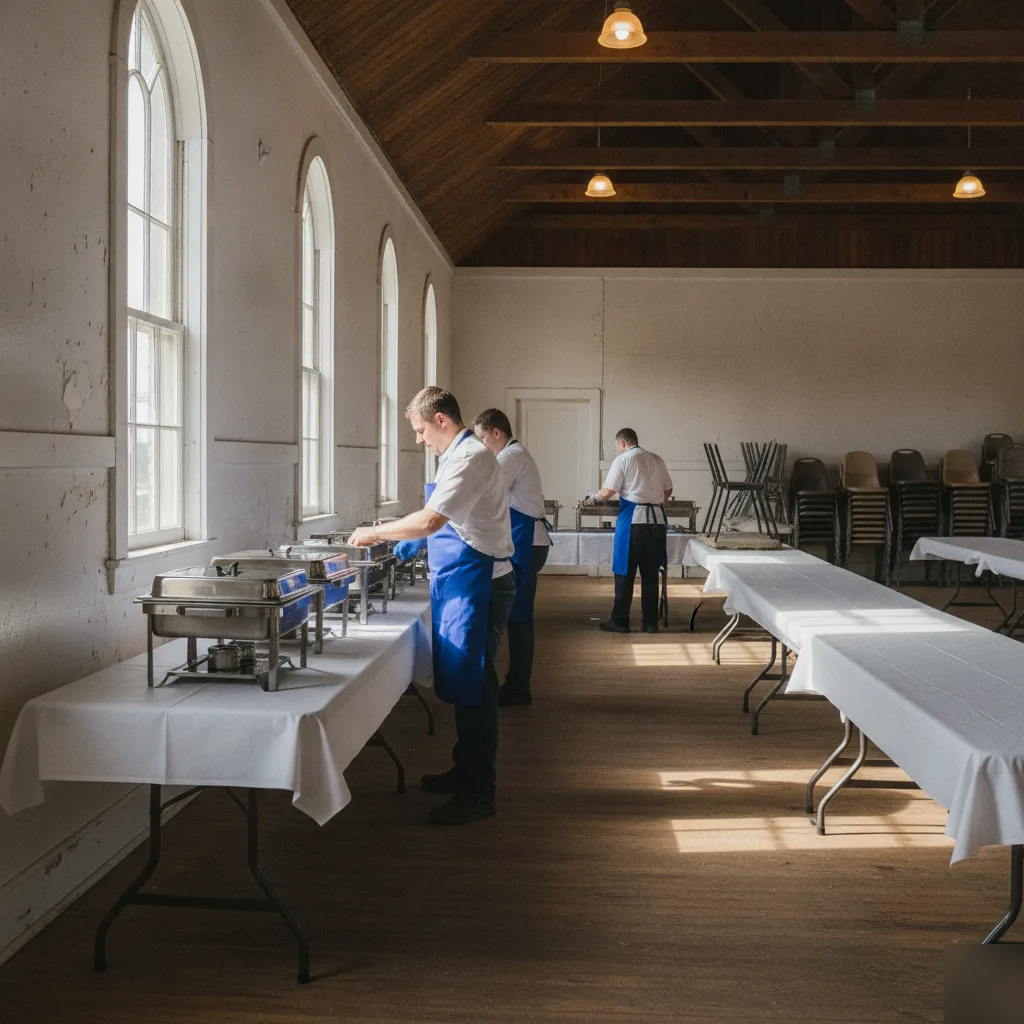
Your caterer has their own contract. Your venue has a separate one. These two documents don't always talk to each other. Your caterer might assume they'll have full kitchen access. The venue might assume the caterer is bringing portable equipment. Nobody checks until the week of your event.
Ask both sides the same questions early.
According to the National Association of Catering and Events, nearly 40 percent of event disputes involve miscommunication between venues and outside vendors. Most of those disputes happen because nobody clarified responsibilities in writing.
Before you sign anything, get clear answers on who handles table setup, who provides serving dishes, and who's responsible for trash removal at the end of the night. These small details turn into real headaches at 10 PM when your guests are leaving and nobody knows whose job it is to break down the buffet line.
One thing that makes life easier is choosing a venue that handles catering for weddings in-house. When your food, your space, and your coordination all come from the same team, there's no finger-pointing and no surprise invoices two weeks later. If you want to see what that kind of simplified setup looks like, check out our wedding venue options to see what's included from the start.
But if you do go the outside catering route, go in with your eyes open. Read every line of both contracts. Ask about every fee, even the ones that seem obvious. The venues that are upfront about costs are the ones worth booking.
Host Your Wedding at Redlands
Redlands Mesa provides space for both wedding ceremonies and recptions.