
What Is the 30-5 Wedding Planning Rule? A Grand Junction Guide
.png)
What the 30-5 Wedding Planning Rule Means
The 30-5 Wedding Planning Rule splits your to-do list into two simple groups: tasks that take about 30 minutes, and tasks that take about 5. It keeps planning from feeling like one huge, scary project. Instead, you tackle small pieces, and your unforgettable day comes together without the burnout.
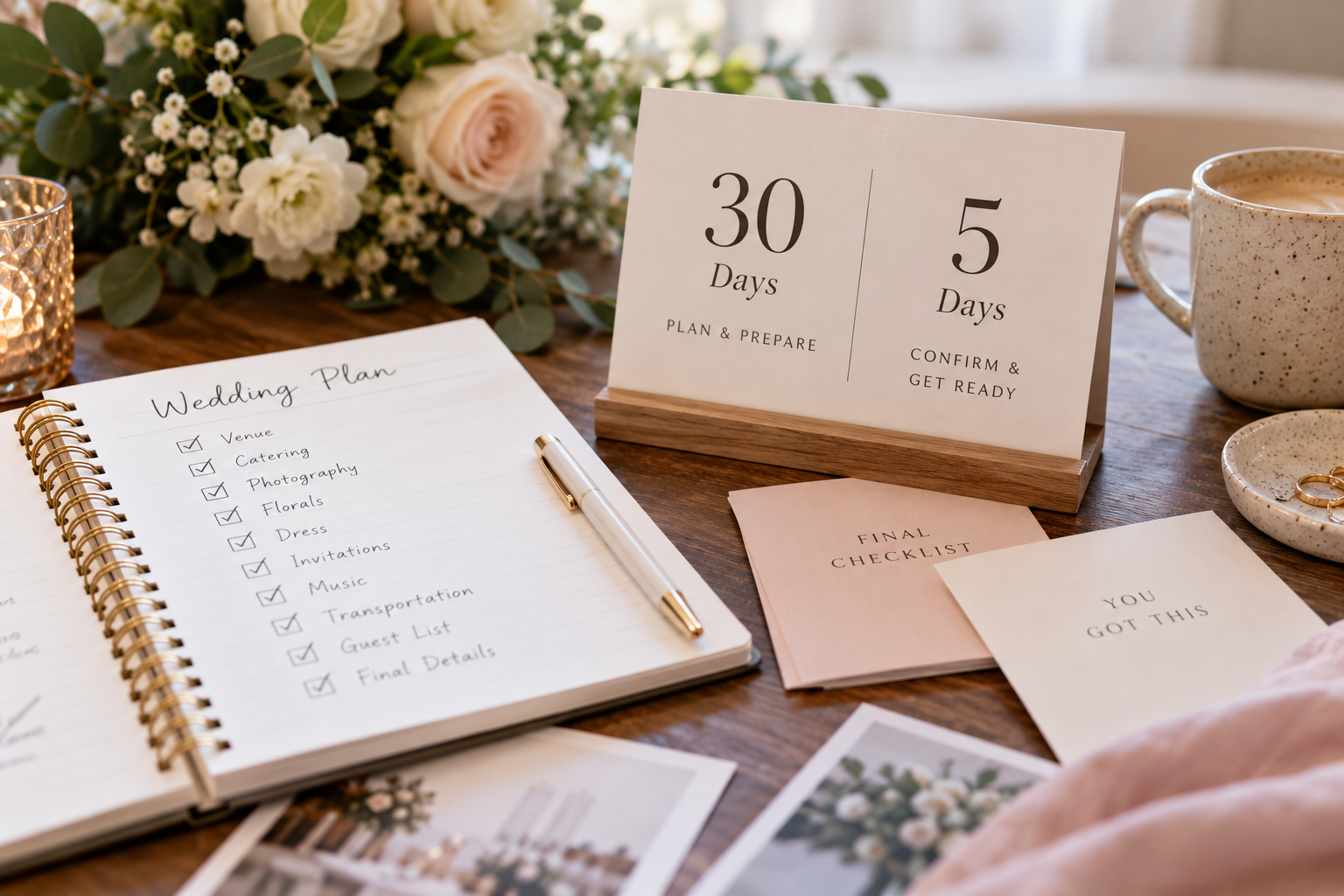
What's the 30-5 Wedding Planning Rule all about? It’s a simple time-management idea. It’s built just for wedding planning. The 30 means tasks that take roughly 30 minutes of focused work. The 5 means quick tasks you can knock out in 5 minutes or less. We like to mix both types into your week. This keeps things moving, instead of saving everything for one overwhelming weekend.
This really matters. Most couples don't miss wedding planning steps because they lack ideas. They do because they never break the work into pieces small enough to start. A task like booking your full-service wedding venue rental can feel massive, so it sits untouched for weeks. But if you tell yourself, "I just need 30 minutes to research three venues," it suddenly feels doable.
We've watched this play out with couples touring our venue here in Grand Junction. Some arrive with a huge binder and a stressed look. Others show up having done small chunks of work over several weeks, and they're calm, focused, ready to make decisions. The difference isn't how much they know. It's how they broke the work apart.
- 30-minute tasks: comparing venues, reviewing Ocotillo Restaurant + Bar catering menu options, drafting your guest list, mapping out a rough wedding timeline
- 5-minute tasks: sending a follow-up email, saving a decor photo, texting your florist a question, confirming a headcount update
- Mix both types weekly so momentum never stalls.
- Bigger decisions like planning get their own dedicated 30-minute blocks, not squeezed into leftover time.
Notice something here. The rule isn't about doing less work overall. It's about matching the size of the task to the energy and time you have that day. Had a rough day? Do a 5-minute task, like checking off your seating chart draft. Got a free Saturday morning? That's your window for a 30-minute dive into your wedding menu options.
This is where a full-service wedding venue changes the math entirely. When your ceremony and reception, in-house catering, and decor all live under one plan, your 30-minute tasks shrink. And your 5-minute tasks handle most of the rest. That's the whole idea behind our all-inclusive wedding package. It’s truly simplified.
Why Day 30 Is a Decision Freeze Point, Not a To-Do Deadline
Here's the part people get wrong. Day 30 isn't the day you finish your to-do list. It's the day you stop changing your mind. Big difference. Your seating chart, your menu, your final headcount-all of it needs to be locked by this point. Not because the work has to be done, but because every vendor downstream is building their week around your final numbers.
We see this mistake all the time. A couple calls two weeks out wanting to swap the chicken for steak, or add six more guests. Sounds small, it's not. Catering orders, rental counts, and staffing schedules get locked days or weeks before your wedding. Once that happens, changes aren't just annoying, they're often impossible.
Think of Day 30 like a freeze frame. Once you hit it, your job shifts. You're no longer deciding; you're confirming. That mental switch matters more than people realize.
- Final guest count gets submitted to your venue and caterer.
- Seating chart moves from draft to final layout.
- Menu selections are locked with no more swaps.
- Vendor contracts get their last review before the big week.
- Timeline details, like when the dance floor opens, get set in stone.
Why 30 days specifically? Kitchens need lead time to order food for your exact count. Rental companies need to route trucks and confirm inventory. Staff schedules get built around your timeline. This lines up with most published wedding planning timelines, which call for locking in these details well before the final weeks. A wedding on a Saturday in June near Grand Junction competes with a dozen other events that same weekend - remember, those summer days get hot, and everybody wants evening bookings - and vendors simply can't hold flexible numbers for everyone until the last minute.
We had a couple planning an outdoor ceremony who wanted to wait until three weeks out to finalize their headcount. Their families kept adding names. By the time they locked it in, the caterer had already ordered for a smaller group. It caused a scramble nobody needed the week of the wedding. Honestly, it just makes things harder.
That's the real reason Day 30 exists. It's not arbitrary. It gives your venue and vendors enough runway to execute your day well. We see it as peace of mind for everyone.
Most people don't realize this until it's too late, and by then, the flexibility is gone. But you don't have to be one of them.
So what should you do with this information? Treat the 30-day mark like a checkpoint, not a finish line. Confirm your numbers early. Talk to your events coordinator about what's locked and what's still movable. And give yourself room to breathe once those decisions are made. A venue that handles your in-house catering, day-of coordination, and timeline in one place makes this whole freeze point far less stressful. Because you're not chasing five different vendors for five different answers.
Why the Final 5 Days Are About Confirmation, Not Decisions
Here's the part couples get wrong the most. They think the last 5 days are for finishing touches, like picking a final menu or deciding on centerpieces. They're not. If you're still making big decisions 5 days out, something went off track earlier. The final stretch should feel calm, almost boring. You're just double-checking what's already been decided.
.png)
We've watched couples try to swap their seating chart on a Wednesday for a Saturday wedding. It rarely goes well. Vendors need lead time to adjust. Staff need a locked plan to execute. So the 5-day window exists to protect everyone, including you, from last-minute chaos.
Think of it like a flight checklist. Pilots don't redesign the plane the morning of takeoff, they just confirm everything is where it should be.
- Final guest count confirmed with your venue and Ocotillo Restaurant + Bar caterer.
- Seating chart printed and shared with your events coordinator.
- Timeline confirmed with every vendor, down to the minute.
- Payment balances settled so nothing is outstanding on your day.
- Emergency contact list shared with your day-of coordination team.
Notice none of those are decisions. They're confirmations. That's the whole point of the 30-5 rule. Big creative choices, like your menu, your florals, your ceremony structure, all of that should be locked by Day 30. The last 5 days are just about making sure the plan holds together.
This matters even more here in Grand Junction, where outdoor ceremonies depend on weather and daylight. A late-October wedding near the Colorado National Monument might need a sunset timeline adjustment. But that's a confirmation of an existing plan, not a new decision. And if a decision does pop up in these final days, that's usually a sign of a gap from earlier planning, not something you should try to fix under pressure.
So what happens if you're 5 days out and still deciding on big things? Take a breath. It's not too late, but it does mean you need help pulling those pieces together fast.
This is exactly why couples lean on us for day-of coordination and full wedding timeline coordination. We build the final week around confirmation, not scrambling. Your seating chart, your vendor schedule, your décor setup, all of it gets locked well before the last 5 days. We want you to enjoy your week. That's why we emphasize transparent pricing and no hidden fees from the start.
Frequently Asked Questions
How do I know if the 30-5 Wedding Planning Rule will work for my wedding?
The 30-5 Wedding Planning Rule works for almost any wedding size or style, because it's about matching tasks to your time, not your guest count. If you have a busy work schedule, this method fits small planning sessions into normal days instead of one huge weekend. Couples in Grand Junction planning both backyard weddings and larger venue events use it well. The rule simply keeps you moving forward, a little at a time, so nothing feels too big to start.
What's the difference between a 30-minute task and a 5-minute task in wedding planning?
A 30-minute task needs focused thinking, like comparing venues or drafting a guest list. A 5-minute task is quick and doesn't need deep concentration, like sending an email or confirming a headcount. Mixing both keeps your planning steady instead of stalled. On low-energy days, pick a 5-minute task. When you have a free morning, tackle a 30-minute one. This balance is part of why full-service planning support helps couples save time and stress.
When should I bring in a wedding planner instead of doing the 30-5 method myself?
You should consider a planner when your 30-minute tasks keep piling up faster than you can finish them. This often happens with big guest lists, multiple vendors, or tight timelines. A planner or full-service venue absorbs many of those 30-minute decisions for you. If you're feeling stretched thin even after breaking tasks apart, it's a sign to get outside help before burnout sets in.
What's a common mistake couples make with wedding planning timelines?
The biggest mistake is waiting to make big decisions right up until the wedding date instead of locking them in early. Couples think they have more flexibility than they really do. Caterers, rental companies, and staff all need lead time before your date. Locking your numbers by the 30-day mark, then only confirming details in the final days, keeps everything running smoothly. Our guide on the 30-5 Wedding Planning Rule breaks down exactly what to lock in and when.
Does Grand Junction's wedding season affect how I should plan my timeline?
Yes, summer weekends in Grand Junction get booked fast, so vendors need your final numbers earlier than you might expect. Hot summer days also push more couples toward evening timelines, which adds pressure on caterers and rental companies working multiple events the same weekend. Locking your headcount and menu choices by day 30 gives local vendors enough time to plan around your date without last-minute scrambling.
Why do vendors need my final guest count so far ahead of my wedding date?
Vendors need your final count early because food orders, rental deliveries, and staffing schedules all get built around that number. Kitchens order ingredients for an exact headcount, and rental companies route trucks based on confirmed inventory needs. Changing your numbers too close to the date can mean vendors can't adjust in time. That's why the 30-day freeze point exists, so everyone downstream has enough runway to do their job well.
Play at an Award Winning Golf Course
2325 W Ridges Blvd,
Grand Junction, CO 81507
(970) 255-7400