
How Much Does a Wedding for 100 Guests Cost in Grand Junction?
What a 100-Guest Wedding Typically Costs
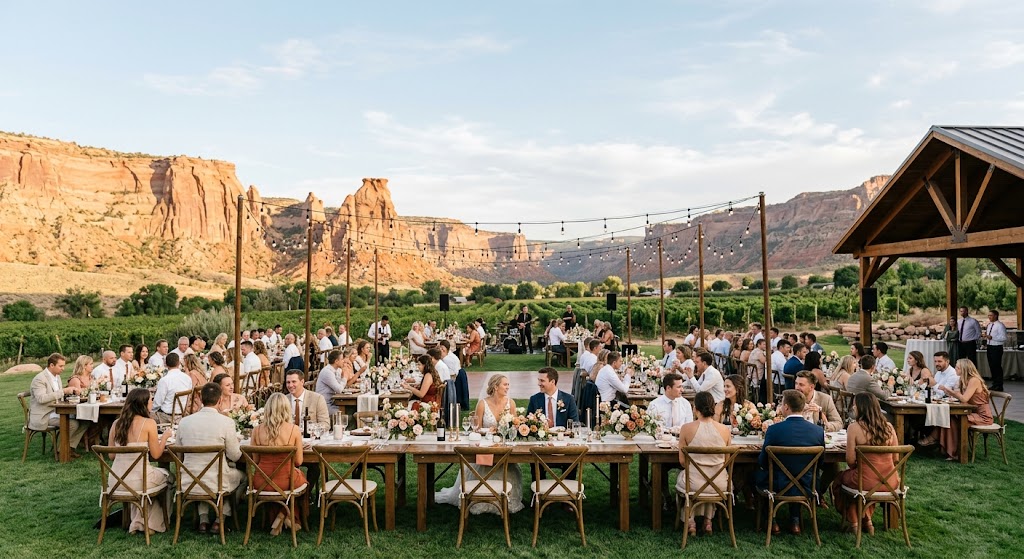
A 100-guest wedding usually breaks into a handful of big pieces: venue, food, drinks, decor, and coordination. The total for 2026 really comes down to how many of those pieces you're paying for separately versus getting bundled together. Couples who book an all-inclusive wedding package tend to feel less sticker shock because fewer surprise costs show up later.
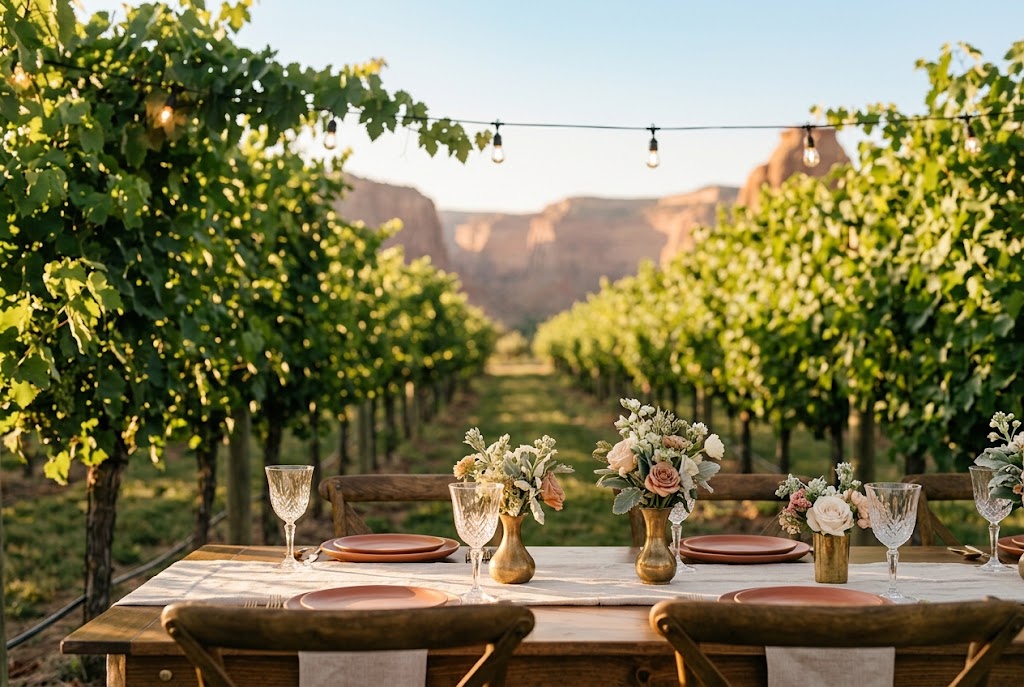
Let's talk numbers in a real way. Not a scary way. When couples ask us what a 100-guest wedding costs in 2026, they're usually picturing a huge spreadsheet full of separate vendors. And for a lot of weddings, that's exactly how it works. You've got the venue rental, then catering, then rentals for tables and chairs, then a florist, then a coordinator, then lighting. Each one is its own bill, its own contract, its own phone call.
Here's the thing we've noticed after years of hosting weddings here in Grand Junction. The couples who feel calmest on their wedding day almost always choose one location for both the ceremony and reception. That single choice cuts down on so much cost and stress. No renting a second space. No paying two site fees. No shuttling guests across town in the Colorado heat or a surprise spring wind.
- Venue rental with ceremony and reception in one location, so you're not paying two site fees
- Catering, often priced per guest and easier to plan once your headcount is locked in
- Rentals like tables, chairs, and a dance floor, which cost more when sourced separately
- Decor and lighting installation, which can be a small add-on or a big line item depending on your vision
- Day-of coordination, which many couples skip in their budget until they realize how much it saves them
We see this mistake all the time: couples budget for the venue and the food, then forget about rentals, coordination, and decor until a month before the wedding. Suddenly there's a scramble to cover the extras. That's usually what makes people feel like their wedding costs way more than they expected. It's not one big expense. It's ten small ones that add up fast.
An all-inclusive wedding package changes that math. When your venue rental already includes catering, tables, chairs, a dance floor, and someone helping you coordinate the timeline, you're not chasing down five different vendors and hoping they all show up on time. You're paying one clear number for one clear experience. For 100 guests, that kind of bundling tends to be the difference between a stressful few months and a smooth one.
So how do you figure out your number? Start with your guest count, since that drives catering and rental costs more than almost anything else. Then decide if you want an outdoor wedding venue, an indoor space, or something like a country club or golf course setting with a view built in. Grand Junction couples often love the outdoor option for the mountain backdrop, but weather here can shift fast, so ask any venue how they handle a backup plan.
One more thing worth saying plainly: your final number depends on choices, not luck.
Why Cost Per Guest Isn't a Simple Multiplication Problem
So you found a number online that says weddings cost a certain amount per guest. And you multiplied it by 100. Easy, right? Except it's not, and we hear this confusion from almost every couple who walks through our doors. A per-guest number sounds simple, but it hides a dozen moving pieces. Two weddings with the exact same guest count can land in totally different places once you add up the real choices behind them.
Here's why. Cost per guest usually only covers food and maybe drinks. It rarely includes the venue rental itself, the rehearsal dinner space, decor lighting, the dance floor, or day-of coordination. And those pieces don't scale evenly with headcount the way a dinner plate does. A florist's fee for centerpieces doesn't double just because your guest list grows from 50 to 100. Neither does the cost of a coordinator managing your wedding timeline.
We also see couples forget that some costs are flat no matter how many guests show up.
- Venue rental for your ceremony and reception space, whether you fill every chair or not
- Decor lighting installation and event decoration, priced by the design, not the guest count
- Day-of wedding coordination and wedding timeline coordination, which take the same planning hours for 60 guests as for 100
- Dance floor rental, a fixed setup cost regardless of how many people use it
- Seating chart planning, which gets more complex with more guests but isn't priced per head
Then there's the food and catering side, which genuinely does scale with your guest count, but not in a flat line. Banquet catering services often have pricing tiers. Add 20 more guests and you might jump into a different tier entirely, which can shift your per-guest math more than you'd expect. This is one reason planning for weddings works better as a real conversation with a venue than a guess based on an online average.
Grand Junction couples have an advantage here that a lot of other markets don't. Because so many local venues offer all-inclusive wedding packages, you're not stitching together six vendors and hoping the math works out. When your ceremony and reception are in one location, with catering, decor, and coordination bundled together, you get one clear number instead of ten shifting estimates.
A quick real scenario. We had a couple last season who budgeted using a per-guest number they'd found online. They planned for 100 guests and felt confident about their total. But their number didn't include rehearsal dinner venue costs or a seating chart planning session, and they were surprised when those got added elsewhere. Once we walked them through an all-inclusive package instead, the whole picture clicked. Nothing extra was hiding around the corner.
The lesson isn't that per-guest math is useless. It's that it only tells part of the story.
How Season Changes the Price in Western Colorado
So what does a 100-guest wedding cost in 2026 once you factor in season? A lot more than most couples expect. Grand Junction sits in a valley with warm summers and mild shoulder seasons, and that climate shapes demand hard. June through September books up fastest around here, and vendors know it. Prices for catering, rentals, and florals often climb during peak months because everyone wants the same weekend.
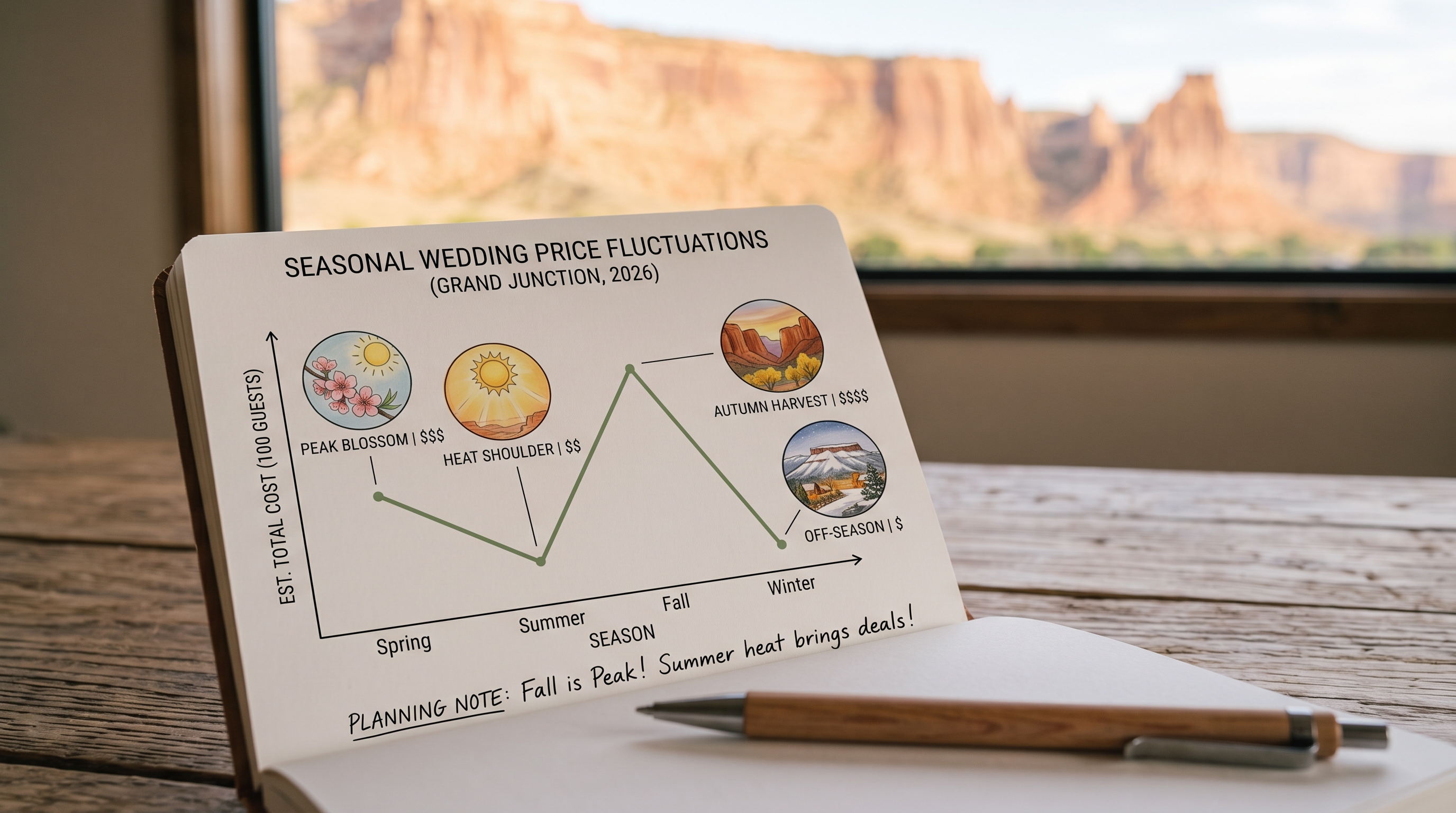
We see this every year. A couple calls in February wanting a September Saturday, and we have to tell them it's already gone. Popular dates near the Colorado National Monument's best weather windows disappear a year in advance. That demand pushes vendor pricing up across the board, not just at venues.
Here's the part people don't think about: off-season weddings can save real money without sacrificing much.
- Summer weekends (June-August): highest demand, highest vendor pricing, book 10-12 months out
- Fall weekends (September-October): still popular for foliage and mild weather, moderate pricing
- Winter dates (November-February): lowest demand, often lower catering and rental costs
- Spring (March-May): unpredictable weather but noticeably less competition for dates
Winter in Grand Junction isn't as harsh as people picture. We don't get the deep snow totals you'd see in the mountains an hour away. That makes cooler months a real option, not just a fallback. Couples who choose January or February often free up a big chunk of their budget for things like menu upgrades or extra decor lighting installation.
Friday and Sunday weddings follow the same logic. Saturday in peak season costs the most, always. Move your date even one day and vendors often have more flexibility on pricing and availability. This isn't a guaranteed discount everywhere, but it's a pattern we've watched play out again and again with couples planning their ceremony venue and reception together.
And weather matters beyond just comfort. An outdoor wedding venue in July means you're planning around afternoon heat and possible thunderstorms rolling off the Grand Mesa. A fall date means golden light and crisp air, but shorter daylight hours to plan around. Every season has tradeoffs.
One couple we worked with almost locked in a July Saturday, then switched to an October Friday instead. Same guest count, same vision, noticeably easier conversation with vendors. They didn't lose anything by moving the date. They gained breathing room.
If you're weighing dates against your budget for 100 guests, that's exactly the kind of planning conversation worth having early. Our approach to planning for weddings looks at your season, your guest count, and your must-haves together, so you're not guessing.
Frequently Asked Questions
How do I know if an all-inclusive wedding package is right for my 100-guest wedding?
An all-inclusive package usually makes sense if you want fewer vendors to manage and less risk of forgotten costs. It bundles venue, catering, rentals, and coordination into one plan, so you are not juggling five contracts. This works well for couples who value a calm planning process over piecing things together themselves. If you enjoy managing lots of small details, a separate-vendor approach might still work for you. Either way, comparing options on the wedding packages Grand Junction page can help you decide.
What's the biggest misconception couples have about wedding costs for 100 guests?
The biggest misconception is that cost scales evenly with guest count. In reality, things like venue rental, decor lighting, and day-of coordination stay flat no matter how many chairs are filled. Only food and drinks truly scale with your headcount, and even that moves in pricing tiers rather than a smooth line. Couples who multiply an online per-guest number by 100 often miss flat costs entirely. That gap is usually what causes budget surprises later in planning.
Does Grand Junction weather affect wedding planning for a 100-guest event?
Yes, Grand Junction weather can shift quickly, especially in spring and summer. An outdoor wedding with a mountain backdrop is popular here, but wind or sudden heat can change your plans fast. Always ask any venue how they handle a backup indoor space for 100 guests. This matters more with a larger guest list, since moving everyone at the last minute takes more coordination than a smaller gathering.
When should couples start locking in their guest count during planning?
You should lock in your guest count as early as possible, ideally before you request catering or rental quotes. Guest count drives food costs and rental needs more than any other factor. Waiting too long can mean redoing quotes or missing pricing tiers that catering companies use. Early planning also helps your venue plan seating charts and layout without last-minute changes.
Why do two 100-guest weddings sometimes cost so differently?
Two weddings with the same guest count can differ because of the choices behind them, not the headcount itself. One couple might book separate vendors for venue, catering, decor, and coordination, while another books one all-inclusive package. Flat costs like coordination and lighting stay the same either way, but bundling changes how many separate bills you handle. This is why comparing real venue options matters more than comparing a single per-guest number online.
What should I ask at a venue before booking for 100 guests?
Ask if the ceremony and reception happen in one location, since this avoids paying two site fees. Also ask what is included in catering, rentals, decor, and coordination, since bundled packages often prevent surprise add-ons. For Grand Junction weddings, ask about backup plans for outdoor spaces in case of weather changes. These questions help you compare real totals instead of guessing from an average.'
Play at an Award Winning Golf Course
2325 W Ridges Blvd,
Grand Junction, CO 81507
(970) 255-7400